
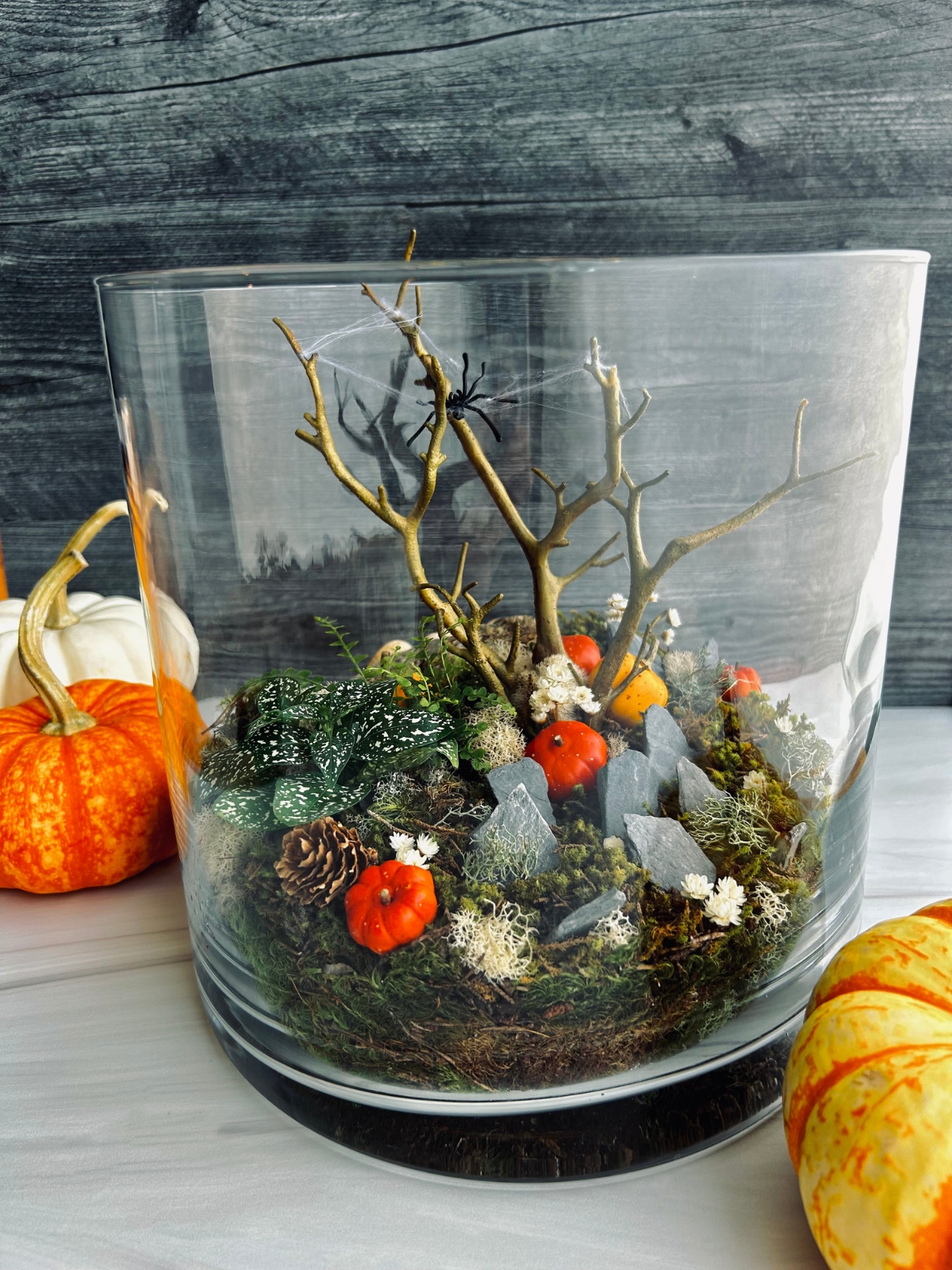
Photo courtesy of Plant and Bloom Design Studio
By Linda Langelo
Make a unique Halloween display by getting into the spirit of “terroriums.” These are terrariums that you make spooky, creepy, or mysterious! They can fit in any spot in an apartment, condo, or home without changing anything. From open glass vases and bowls to closed containers, you can use your creativity in picking the container.
Our home and garden décor experts have some frightful plant suggestions and best practices on arranging, care, maintenance, and festive bling.
Picking the right container
“If you have a big space, you could get something big, or if you have a small space, get something small,” said Judy Alleruzzo, houseplant expert at Al’s Garden and Home. “You could plant 1 plant instead of 6 or 7. Really any size, but 8 inches tall by 10 inches wide to work with or for a tabletop 6 inches tall by 6 inches wide.”
“For apartment or condo living, small to medium-sized tabletop glass vessels or hanging lantern-style containers are ideal choices because they take up minimal space while delivering a high visual impact,” said Daniel Fender, shop manager at Roosevelt’s Terrariums. “We recommend clear or very slightly tinted glass containers that come with a nicely fitting lid-such as a cork lid, a screw top, or one with a rubber gasket-to lock in humidity.”
Having a container large enough is another issue. “Choose a container with an open top that’s large enough for you to comfortably reach inside and arrange the plants and decorative materials, and make sure the finished terrarium fits comfortably in the spot where you plan to display it,” said Amy Martin, founder of Plant and Bloom Design Studio.
If you prefer a large, narrow container, “the old glass water bottles are perfect for a first-time terrarium project,” Alleruzzo said. “It is best to use tweezers to plant and place the plants in the bottle.”
Pick plants that fit
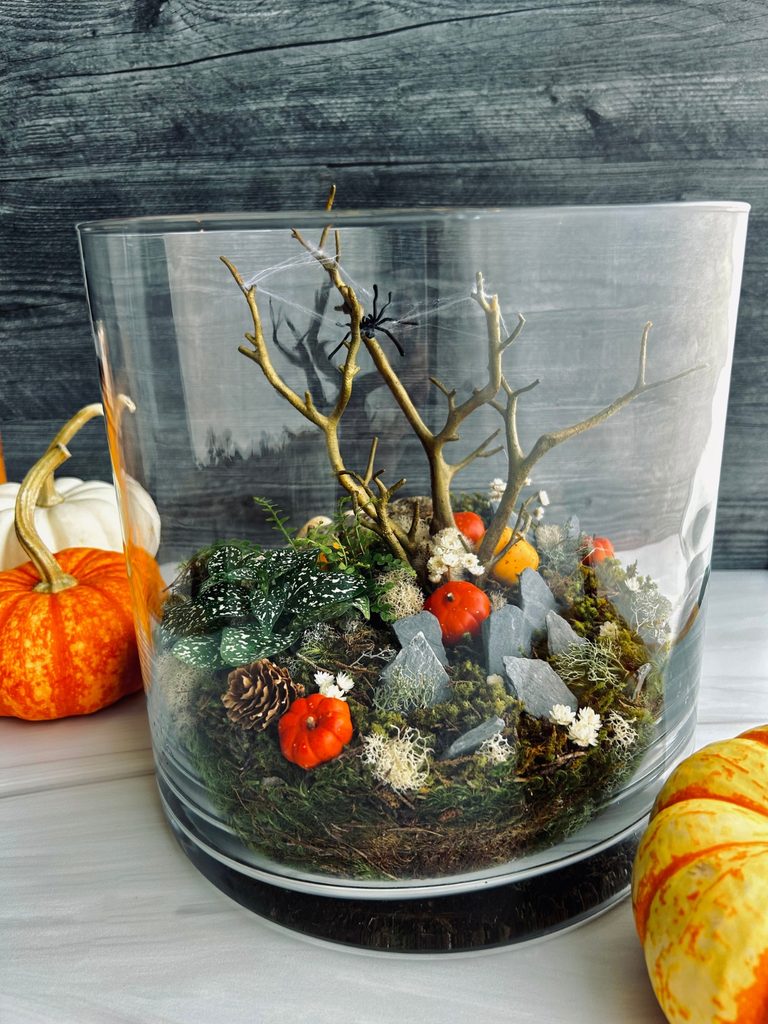
Choose plants that fit the proportions of your terrarium container to create a balanced but spooky display. “Plants with deep burgundy, near-black, or sharply pointed foliage are perfect for setting an eerie or dramatic mood inside the glass,” Fender said. “Burgundy Earth Star (Cryptanthus ‘Burgundy’) are popular because of their spiky, alien-like rosette leaves and deep wine colors.”
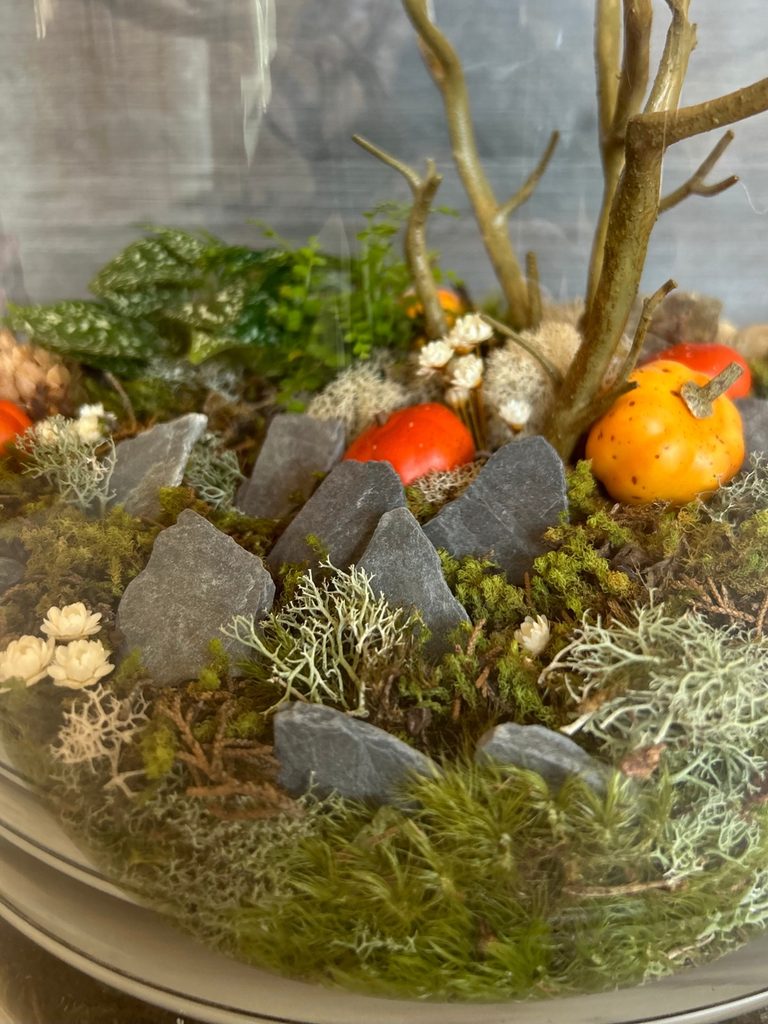
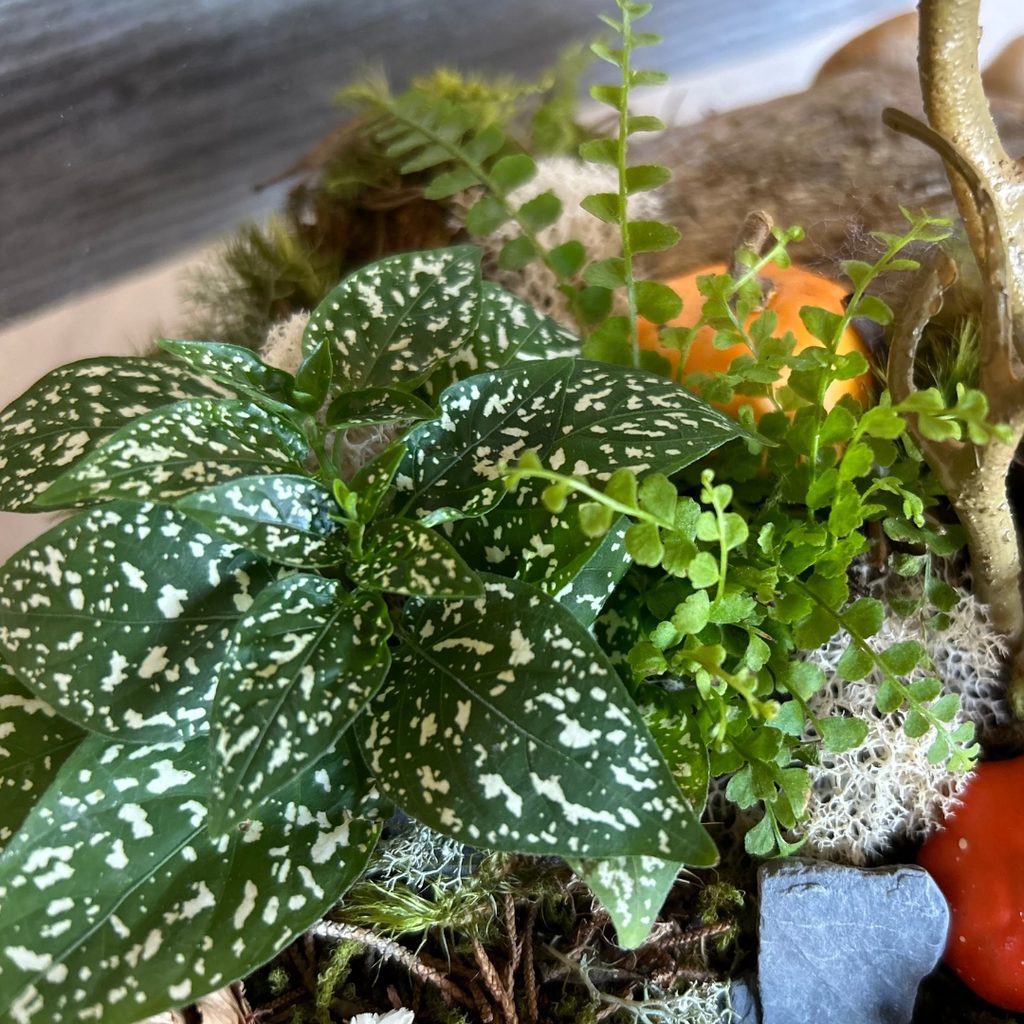
“I especially like nerve plant (Fittonia albivensis) and polka dot plant (Hypoestes phyllostachya), for Halloween terrariums,” Martin said. “Their colorful, patterned foliage brings lots of visual interest to a small display. Lemon Button Fern (Nephrolepsis cordifolia ‘Duffii’), is a compact fern with small, rounded leaflets that gives the terrarium a woodland feel. Creeping Fig (Ficus pumila) has tiny leaves and trailing growth that look great winding around rocks and other features.”
“Spider plants with their long foliage look like tendrils,” Alleruzzo said.
Spiderwort (Tradescantia) have nice patterns in their leaves and spike moss (Salaginella) have very interestingly shaped leaves. Burgundy rubber trees (Ficus elastica ‘Burgundy’) with dark foliage and Neanthe bella palms (Chamaedorea elegans), which have finely cut foliage, are also good choices.
Adding decorative elements
Once you have chosen the bare bones — the plants — for the terrarium, add a little festive bling that won’t harm the plants.
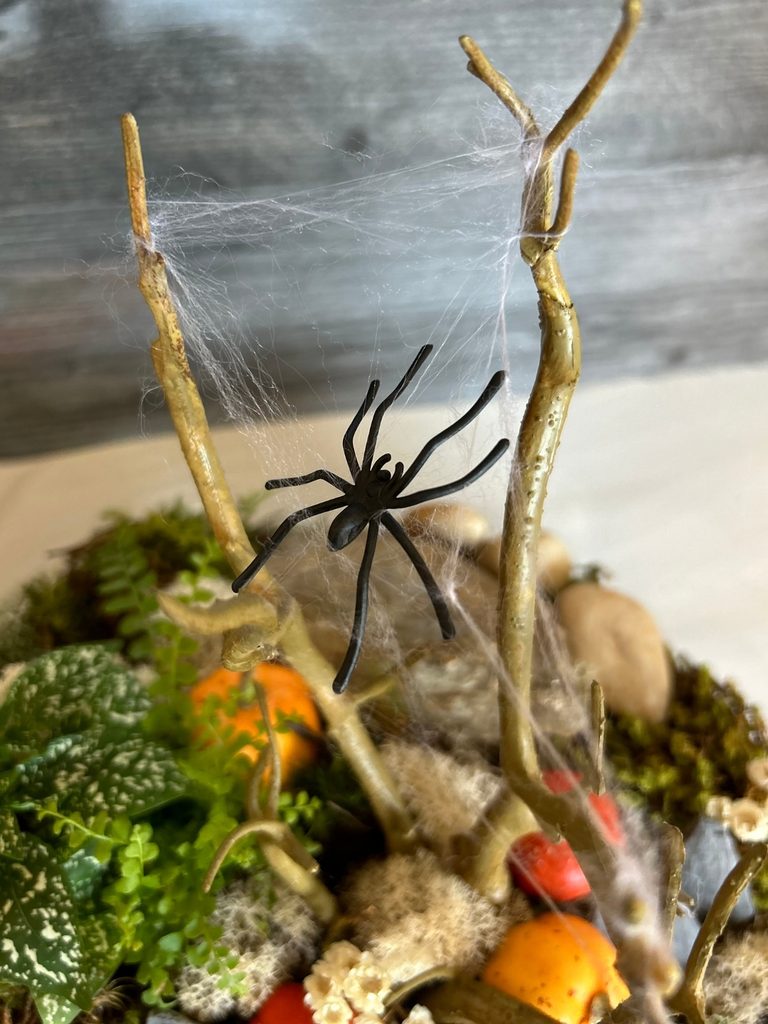
“If you want to add outdoor elements, you must be careful not to bring in insects or disease,” Alleruzzo said. “I would microwave it first for ten seconds, and that way you are preserving it. Sticks you can microwave or wash with a bleach solution. Make sure the bling you add does not decay or is painted. But you could add any resin items such as spider rings, skeletons, skulls, hands, or pumpkins. If you add seashells, wash them well because they have sea salt, which is not good for plants.”
“It is safe to add non-porous elements such as aquarium-safe resin figurines, sealed ceramic miniatures, polished river stones, slate, quartz, volcanic rock, and terrarium mosses,” Fender said. “Standard plastic or resin miniatures generally hold up well inside moist environments without leaching chemicals.”
Assembling the ‘terrorium’
“Before putting the plants in the container, arrange them on a table, making sure of proper spacing. You can damage the roots by handling the plants too much,” Alleruzzo said. “Place the gravel first, then add about an inch of soil, then place the plants and add soil around the root ball. You can remove about ¼ from the root ball. This keeps the plants at the right height for the size of the container. You can also add charcoal at the bottom to get rid of odors, but not water.”
Watering and maintaining
To maintain a terrarium for both beginners and seasoned terrarium enthusiasts, there are a few recommendations. The experts all agree: be careful not to overwater. Most terrariums are closed systems.
“Containers with tight-fitting lids recycle their own moisture cycle and only need re-watering every several months to once a year or whenever the soil lightens to a light brown color,” Fender said.
“Overwatering is probably the biggest mistake. This type of terrarium has no drainage holes. Tropical plants and living moss appreciate the moist soil, but because excess water has nowhere to go, you need much less water than you might expect,” Martin said.
“You can use a turkey baster to water. Or use tablespoons of water to direct the water. Do not use a watering can because you can’t easily direct the water,” Alleruzzo said.
“Mold and fungus thrive in stagnant, overly wet conditions with poor airflow, usually signaling that the terrarium was overwatered or contains decaying plant debris. If a layer of mold appears, you can temporarily remove the lid for a few days to drop the humidity and gently wipe away visible mold spots. Adding beneficial micro-organisms such as springtails or balancing your watering schedule will keep the mini-ecosystem clean and healthy over the long term,” Fender said.
“Too much water inside? Tip it gently or use a paper towel to soak it up. If it is bad, replace the plant and maybe some of the soil,” Alleruzzo said.
To avoid another common mistake, it is important to understand the right light exposure. Since these are mostly closed systems that require tropical plants, unless the plants are cacti or succulents, the proper light is indirect. Acclimating the new plants to their new space is important.
“Another common error is placing the terrarium in direct, harsh afternoon sunlight because glass magnifies light. Direct sun quickly overheats the vessel and bakes the plants,” Fender said.
“You need to acclimatize the plants to your home. I would wait a couple of days once the terrarium is finished before putting the lid on it. Then put the lid on and make sure you have enough condensation. Once you get it into a cycle, you might have to check it once a week or every two weeks depending on the light,” Alleruzzo said.
After Halloween, use your voodoo charm to transform your terrarium into a Thanksgiving or Christmas decoration by replacing the tombstones with a snowman and skeletons with a scarecrow.
‘Terrorium’ workshop
Join Al’s the Saturday before Halloween to create your very own ‘Terrorium,’ a spooky little illuminated garden that’s equal parts creepy and cute. All Al’s Garden & Home locations 10–11 a.m., October 24. Your $50 workshop includes a lighted terrarium with batteries, soil, two plants and a collection of spooky accoutrements to help you create your own haunted little world. Everything you need is included, and you’ll leave with a finished Terrorium ready to light up your Halloween décor. For more information and to register