
By Samantha Huisman, Proven Winners
Climbing hydrangeas are probably not the first thing that comes to mind when you hear the word “hydrangea,” but they are incredible plants that make a statement in the garden. These hydrangeas grow as vines that attach themselves to trees and other structures.
Why plant climbing hydrangeas?
As a vine, climbing hydrangeas offer a new, unique way to use hydrangeas. They are a great way to add more vertical interest to your garden.
Any sturdy surface will do, including fences and large shade trees.
While they’re pretty slow growing, once established, climbing hydrangeas are super easy to care for. With no need to train or prune these old-wood bloomers, you can sit back and enjoy the view with little fuss.
Climbing hydrangeas will climb trees in your woodland garden. Shade trees are the perfect structure for climbing hydrangeas, so a woodland garden is a natural fit. These hydrangeas are also fairly shade-tolerant, doing well in part shade conditions.
Unlike most hydrangeas, climbing hydrangeas are quite fragrant. Their lacecap blooms give off a sweet fragrance that is enjoyable for you and attracts pollinators.
The lace cap blooms of climbing hydrangeas are great for attracting pollinators. The center of each bloom is packed with fertile flowers that pollinators will enjoy.
Climbing hydrangeas are quite slow to establish and bloom, but once they do, they are so worth it as they provide years and years of beauty.
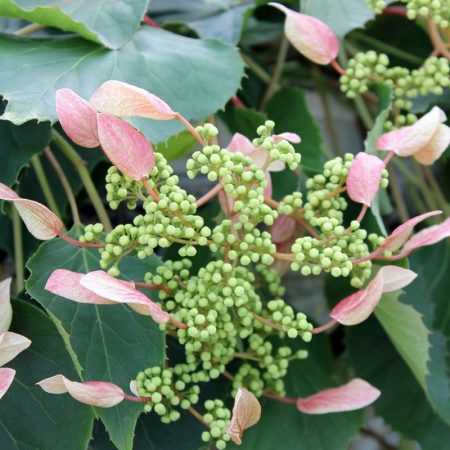
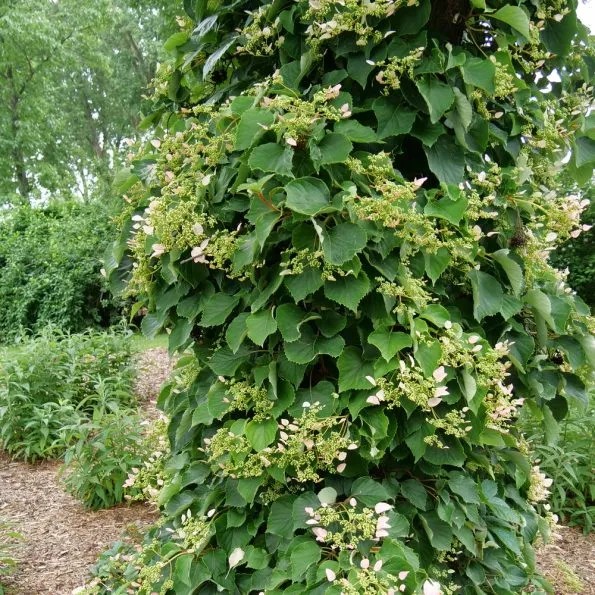
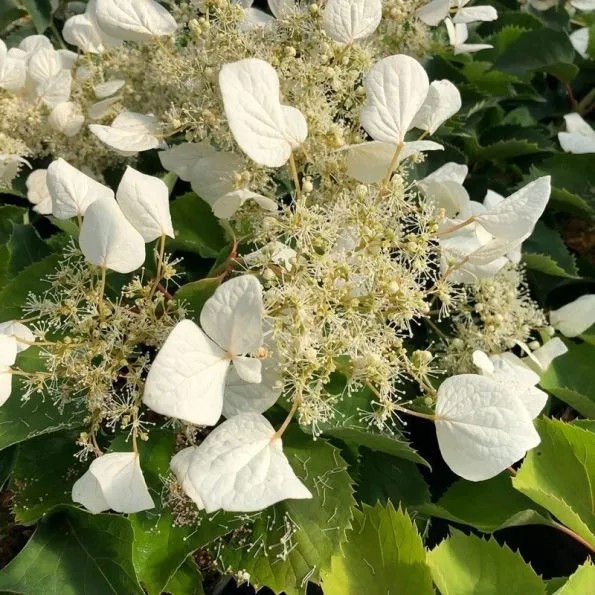
Flowers
Both species of climbing hydrangeas have lacecap flowers with inner fertile florets surrounded by outer sterile florets. The difference between the two comes from the outer sterile florets.
For climbing hydrangeas (Hydrangea petiolaris), each outer floret is the classic four-petal shape
For Japanese hydrangea vines (Hydrangea hydrangeoides), each outer floret is a single sail-like petal.
Both species bloom on old wood in early summer. They only start blooming after they are vigorously growing on a structure, which can take around seven years for many varieties.
Foliage
Climbing hydrangeas have flat and toothed/serrated leaves. They are often heart-shaped or ovate and dark green in color.
Climbing hydrangeas are also deciduous, so they will lose their leaves in the winter and go dormant.
Habit
Climbing hydrangeas aren’t difficult to tell apart from other types of hydrangeas because they have such a unique habit. As vines, they have climbing habits that are often denser at the base of a structure and dwindle as they climb.
They will attach themselves to structures via rootlets that cling to surfaces of your choosing.
Read on to find Proven Winners’ recommendations on picking the right climbing hydrangea