
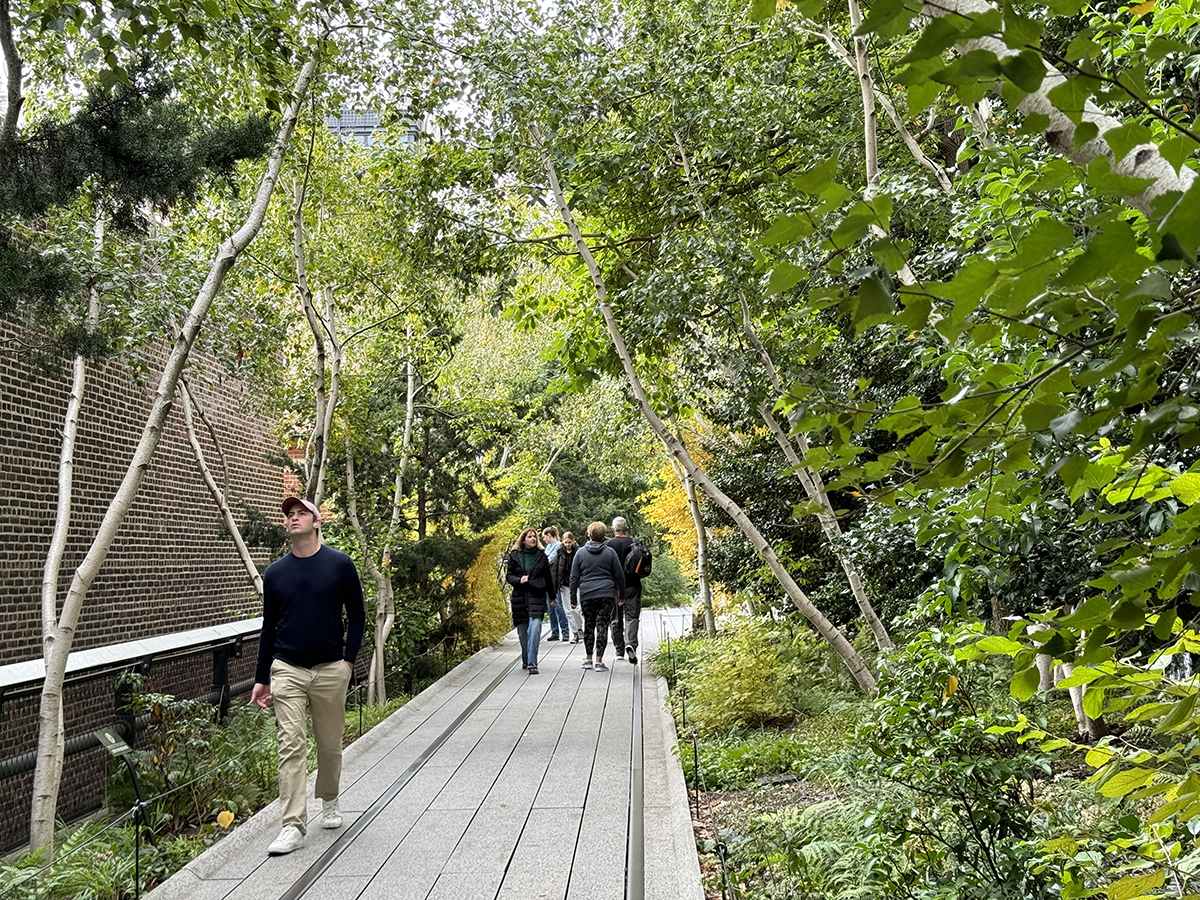
Imagine walking block after block through the Manhattan street grid without having to press a walk button, watch for traffic or cope with any distractions.
You only see an abundance of plant life, the stunning backdrop of the Manhattan skyline, and people out enjoying the day. A couple is enjoying a picnic as ornamental grasses sway nearby. Schoolchildren are listening to a nature talk. Joggers with earbuds weave through the lush, green shade.
You feel peaceful, relaxed, recharged, connected with nature — right in the middle of the densest urban environment in North America.
What’s missing? Traffic. Noise. Distractions.
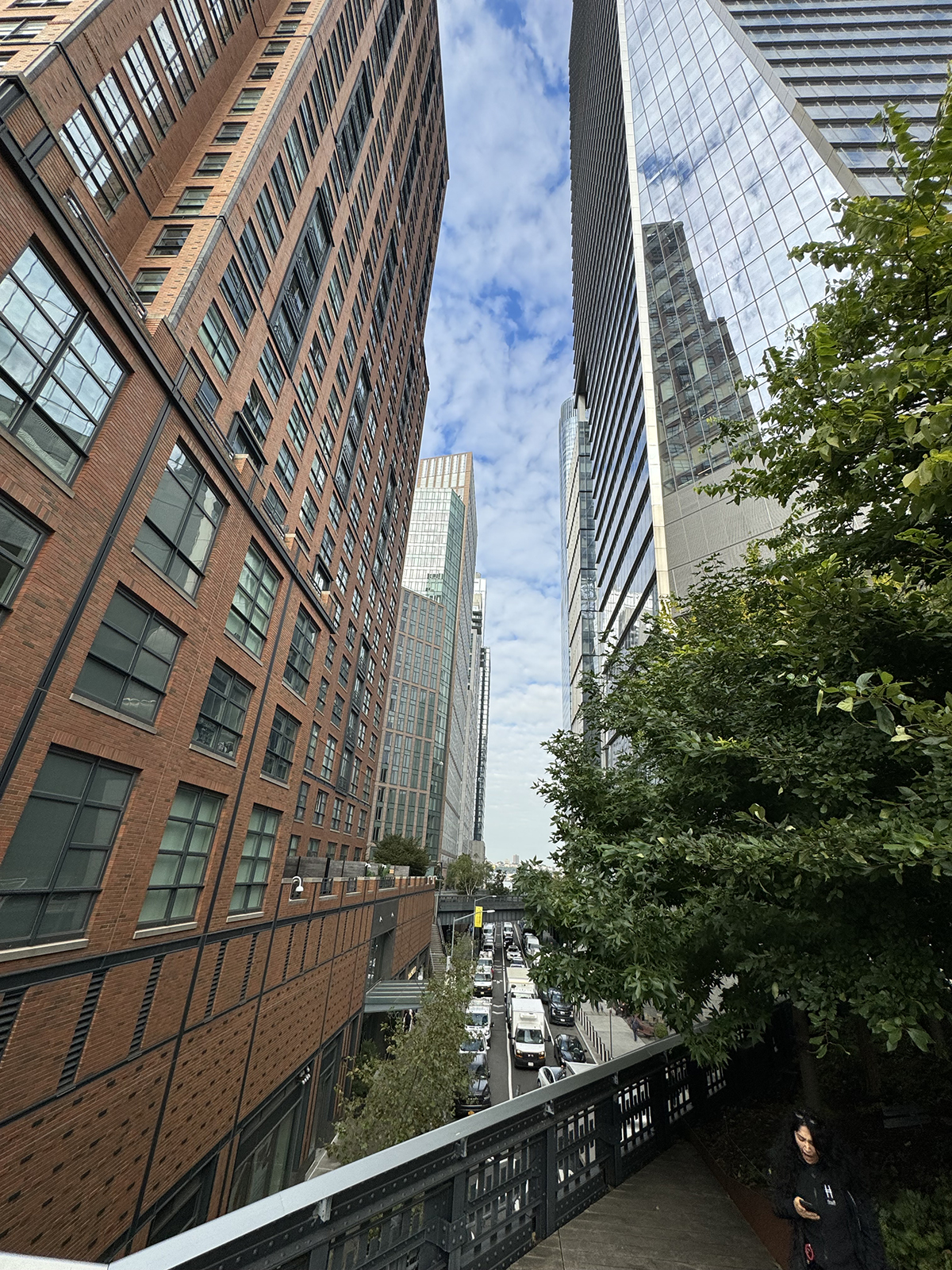
Welcome to the High Line. It’s a 1.5-mile linear park on the West Side that runs from Hudson Yards to Chelsea Market without touching a single crosswalk. It’s situated a few stories above street level on a disused railroad trestle that’s been converted to a beautiful public garden. At designated access points, stairways and elevators provide direct access between street level and the park above.
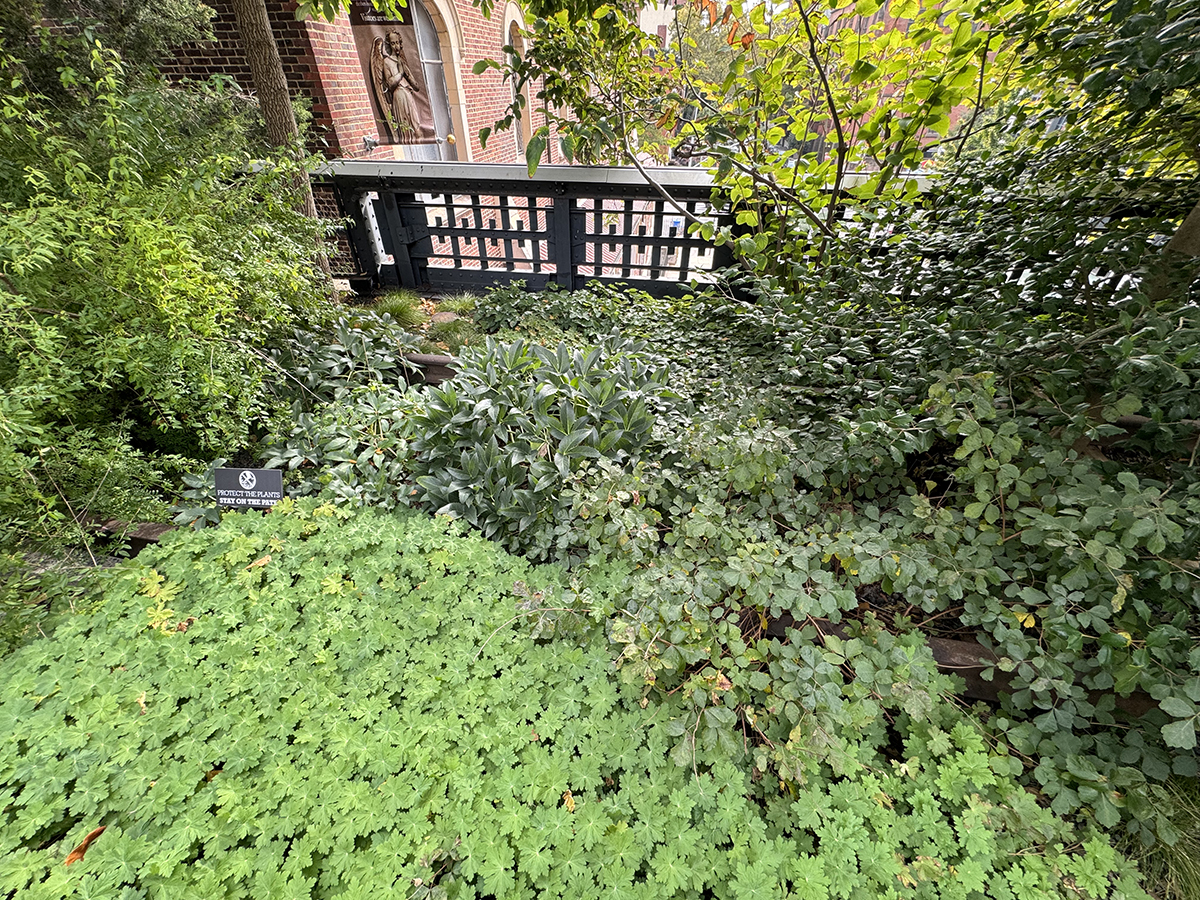
As you walk along the High Line, isolated just enough from the bustle and noise, you pass through different landscape environments — a woodland, a grassland, a native plant zone, a thicket of dogwoods, even a small wetland. Occasionally the trestle passes through building cutouts, such as the Chelsea Market, which used to be a Nabisco factory (side note: the mighty Oreo was invented here).
The woodland has Whitespire gray birch and Allegheny serviceberry trees, with dwarf lady fern, autumn moorgrass and Amethyst Falls American wisteria. The grassland has shade-tolerant woody plants and perennials, like fringetree, thimbleweed, Sinonome toadlily, chokecherry and mountain fleece.
A two-block thicket in the middle of the Chelsea neighborhood forms a green tunnel of bottlebrush buckeye and Emerald Sentinel™ Eastern red cedar, with holly, rose, elderberry, sassafras, hellebore and heuchera beneath.
There are still remarkable views of the city and the Hudson River, but the main feeling is harmony with nature.
It’s a remarkable achievement, as well as a tremendous reuse of an existing asset, especially considering the High Line once was considered an eyesore. Once it was no longer needed for freight, it just as easily could have vanished.
The main trestle of the High Line originated as the West Side Elevated Line, which opened in 1934, providing above-grade passage for freight trains. Its main purpose was to transport meat, dairy and produce through the West Side, threading its way through different neighborhoods like Hell’s Kitchen, Chelsea and the Meatpacking District. It was created because the original street-level tracks were a danger to pedestrians, as borne out by numerous accidents.
The elevated freight line served its purpose for a time, but once freight started moving to street level trucks, the clang of train cars above slowly faded away. In the 1960s, the southernmost leg of the elevated line was demolished. By the 1980s, the remaining elevated line was no longer used at all. Demolition was proposed.
But some people with a creative vision had other ideas. Inspired by rail-to-trail projects throughout the country that were made possible by an act of Congress in 1983, they dreamed of a future where the elevated line remained in place, but it served a new purpose — an above-grade park.
The idea didn’t gain immediate acceptance. In 1991, another five blocks of the West Side Elevated were razed.
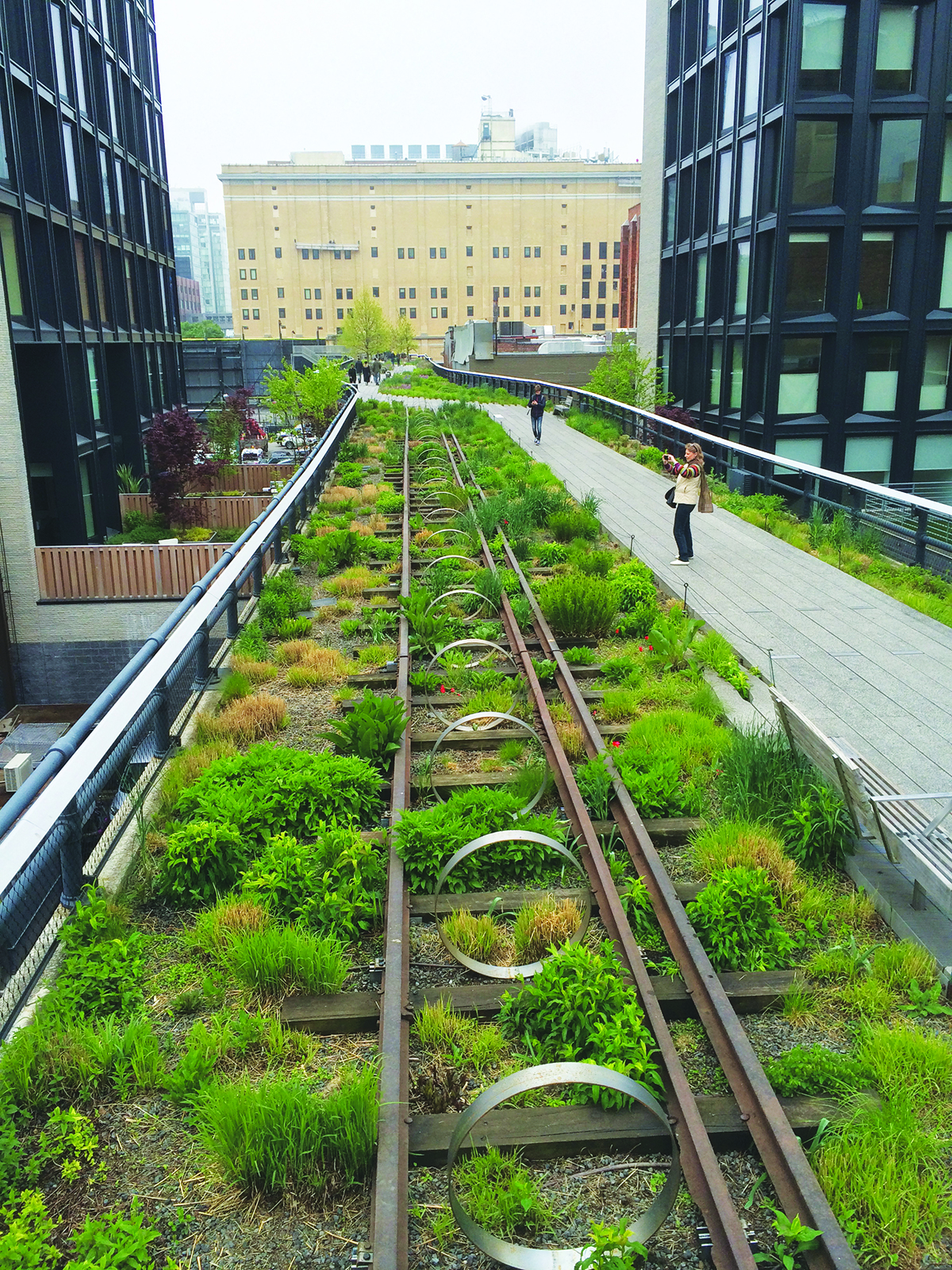
But activists stuck with their dream and in 1999, they formed Friends of the High Line, a nonprofit that today is responsible for operating the linear park. By this time, nature was taking over the disused tracks. Wildflowers were abundant.
The City of New York asked for, and got, other creative reuse ideas were pitched for the structure, such as a very long lap pool.
But in the end, nature raised her hand highest and won out. In the early aughts, the New York City Council and Mayor Michael Bloomberg created special zoning to enable the park, and backers secured funding for what came to be known as the High Line.
In 2006, work on the conversion began.
By 2009, the first segment of the park was open and now the roles were reversed. The freight traffic that once operated above grade now runs at street level, while pedestrians, for the first time, walk above.
Additional segments opened in 2011, 2014, 2019 and 2023. The last connects the High Line to the new Moynihan Train Hall, part of Penn Station. As a result, people can easily access the park via transit from the Bronx, Queens, Brooklyn or just about anywhere in Manhattan.
There’s no doubt the High Line has become a huge success and one of New York’s most frequently mentioned attractions — up there with Broadway, Times Square, Grand Central Terminal, Central Park, the art museums, the Empire State building, the Statue of Liberty and One World Trade Center.
But the impact doesn’t stop there. Friends of the High Line have created the High Line Network, allowing them to support and recognize other infrastructure reuse projects in cities across the United States.
Seattle has torn down its double-decker waterfront freeway, the earthquake-vulnerable Alaskan Way Viaduct, and replaced it with two things — a tunnel for vehicles bypassing downtown, and an upgraded arterial for those accessing it.
The big news for nature lovers is that demolition of the viaduct allowed creation of a well-landscaped linear park along the Seattle waterfront, with access to and from Pike Place Market.
And in Oregon, leaders of the Willamette Falls Trust — backed by area tribes — are working on a project to provide public access to Wilamette Falls, the second-largest waterfall by volume in the United States.
There are many other examples across the country of communities turning trestles, bridges, canals and more into thriving green spaces. These projects don’t just look pretty — they provide research-backed benefits with tangible value.
Plants reduce stress, improve health, boost property values, promote safety, reduce crime, save energy, improve maintenance costs, purify water and nourish ecosystems.
The personal health benefits are particularly noteworthy.
One study found that people who spend time outdoors with plants — in parks, gardens and other green spaces — benefit from increased activity, improved health and reduced health care costs.
“Residents of neighborhoods with beautiful parks are much healthier; their increase in exercise makes them less susceptible to physical ailments and more resilient against minor illnesses,” the study states. “As a result, these residents do not spend as much each year on health care and medical treatment, because they require fewer of these services.”
A different study indicated that outdoor activities can alleviate symptoms of Alzheimer’s disease, dementia, stress and depression, while improving cognitive function.
Other research found that activity in green spaces reduce the incidence of heart disease and stroke.
These personal benefits translate to societal benefits by reducing costs placed on the health care system.