
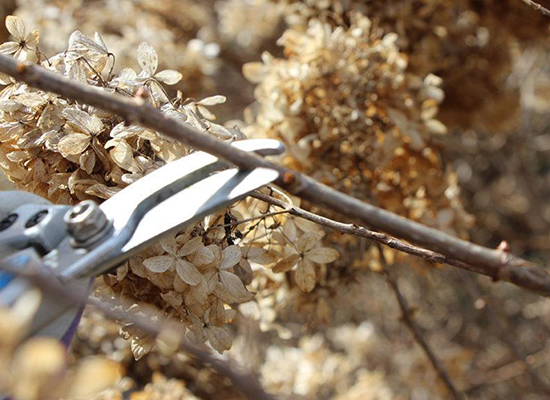
With their colorful and eye-grabbing flowers in a range of colors, verdant foliage and adaptability to most zones, it’s no wonder that hydrangeas are favorites of gardeners in the Pacific Northwest and elsewhere.
But many gardeners feel stumped about how to best care for their hydrangeas to get the most blooms, especially when it comes to deadheading and pruning.
The experts at Monrovia have helpful tips in their “Hydrangea Care Guide: Expert tips for growing confidently.”
Should I deadhead spent blooms?
Yes, but you don’t have to. The most common form that your snipping will take when it comes to caring for your hydrangeas is deadheading. This is not technically “pruning.” Deadheading your hydrangea can increase bloom and help keep your hydrangeas looking neat. However, you also don’t have to deadhead in order to keep your plant healthy.
Some gardeners like to leave the spent flowers on their hydrangeas for seasonal interest. If you do choose to deadhead, remember to leave the flowers on as long as possible. This is because many will change color as they age.
How to deadhead your hydrangeas
Deadhead your hydrangea by cutting right above the set of leaves just below the spent flower. Avoid cutting below the first set of leaves; you don’t want to accidentally cut off emerging buds.
If you find woody stems with no new leaves on them, go ahead and cut them down to the new growth. Or, cut at the base in order to give room for healthier growth. Allow the plant to put energy into that new growth.
Do hydrangeas need to be cut back every year?
No. Many hydrangeas don’t need to be pruned often, or even at all. Unless you need to prune for shape and size or general health of a mature plant, you can skip pruning on reblooming hydrangeas.
Cutting out dead material is important, as it keeps the plant healthy. It increases airflow and allows the plant to focus energy on creating lush new growth and beautiful flowers. Compact, easy-care varieties will rarely need to be pruned if planted in a place where they get the right amount of sun, water, and space to grow.
If you decide that you’d like to prune your hydrangea, you should know what kind of hydrangea you have. Different hydrangea types need to be pruned at different times of the year. For reblooming macrophyllas, prune after summer bloom but not too late — by fall, they’ll be setting buds for next spring. For more information, check out Monrovia’s in-depth guide to how and when to prune hydrangeas.
Still intimidated by pruning your hydrangea? Here’s an easy option: Don’t prune until the buds of your hydrangea start to swell in spring. Then just cut off anything above the healthiest buds at the top. Or you can snip just above healthy buds further down if you’d like to reduce the size of the plant. This technique will keep you from accidentally cutting off all of next spring’s growth.
Do hydrangeas need to be cut back for winter?
No. Hydrangeas don’t need to be cut back for winter. In fact, Monrovia recommends leaving them untouched for visual interest through the season. However, there are some hydrangea types that can be pruned in early fall. Also some that should be left until late winter or early spring.
The general rule is that if you have hydrangeas that form flowers on old wood (like Hydrangea macrophylla a.k.a. “Mophead” hydrangeas including reblooming hydrangeas that flower on both new and old wood). You can prune them in early fall after they are done flowering. Hydrangeas that bloom on new wood (like Hydrangea paniculata a.k.a. Panicle hydrangeas) should be pruned in late winter or early spring. Monrovia’s guide to how and when to prune hydrangeas goes into detail about when to prune different hydrangea types.