
Not ready to put away your gardening tools for the year? No worries. OSU Extension’s “These Cold-Hardy Vegetables May Stick It Out Through Winter” has some excellent advice on some cold-hardy vegetables you can plant now to harvest next spring.
But the window’s small, so don’t procrastinate.
“Winter gardening is a risky business,” said Jim Myers, plant breeder and researcher at Oregon State University. “It may work one year with a mild winter but not another when the weather is more severe. If you plant some cold-hardy vegetables from mid-August to early October — depending on the crop — there’s a good likelihood you will produce something on the other end in the spring. They say farming is a gamble … some years more than others.”
Cold weather doesn’t kill these hardy plants; it simply slows their growth rate. For every rise of 18 F, growth rate doubles, but that guideline is only applicable for an air temperature range of 40–98 F, Myers said. If you plant cold-hardy vegetables from mid-August to early October, there is a chance they can mature by next spring if they survive in a vegetative state through the winter without reproducing.
According to Myers, the hardiest vegetables that can withstand heavy frost of air temperatures below 28 include spinach, onions, garlic, leeks, rhubarb, rutabaga, broccoli, kohlrabi, kale, cabbage, collards, Brussels sprouts, corn salad, arugula, fava beans, radish, mustard greens, Austrian winter pea and turnip.
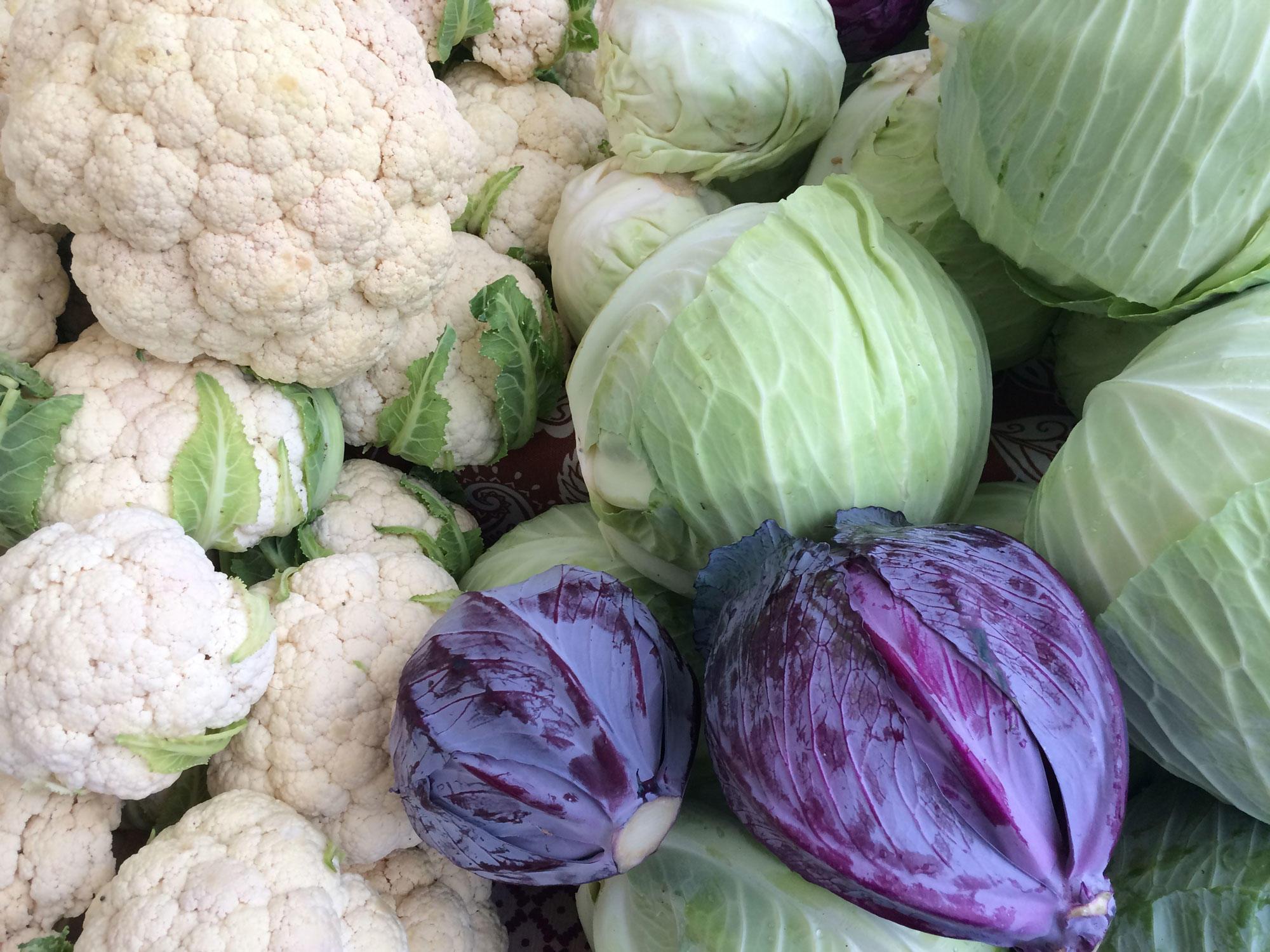
Semi-hardy vegetables that can withstand light frost of air temperatures in the range of 28– 32 F include beets, carrots, parsnip, lettuce, chard, garden pea (before flowering), Chinese cabbage, endive, radicchio, cauliflower, parsley and celery. For beets, carrots and parsnips, the tops will die but the roots will tolerate lower temperatures. For crops that form a head, such as radicchio and other chicories, the outer leaves may die under colder temperatures, but these can be peeled away to obtain an undamaged head within.
Vegetables that contain the pigment anthocyanin, which gives them a vibrant red or purple color, are more resistant to rots caused by winter rains, Myers said. They include purple-sprouting broccoli, Rosalind broccoli and purple kale.
For more information on extending the gardening season, see the OSU Extension guides “Fall and Winter Vegetable Gardening in the Pacific Northwest,” “How to build your own raised bed cloche” and “Garlic for the Home Garden.” For an interactive map of Oregon’s first frost dates, go to the United States Department of Agriculture’s website.