
Visiting other gardens and talking with other gardeners is a favorite pastime of mine. Doing so is often a regular item on my calendar, especially during the spring and summer months.
I am visiting other gardens for a multitude of reasons including the interaction with other gardeners, seeing the design of another garden, and perhaps seeing and learning about a new plant or plants.
I hesitate to refer to a plant as “common” because that seems to somehow give it a connotation of being somewhat less than what it may be. Viburnum plicatum tomentosum ‘Mariesii’ is often seen in gardens. It may be common but when in bloom, it is a magnificent shrub.
However, I am often looking for a plant that perhaps is displayed in a way that I have not seen before. Maybe it is in a grouping of other plants and draws the eye to it. Maybe it is a new plant to me — and as the saying goes, “There is always room for one more plant.”
The plants listed in this column are not necessarily unique, but in my garden, they are plants that consistently attract attention from garden visitors.
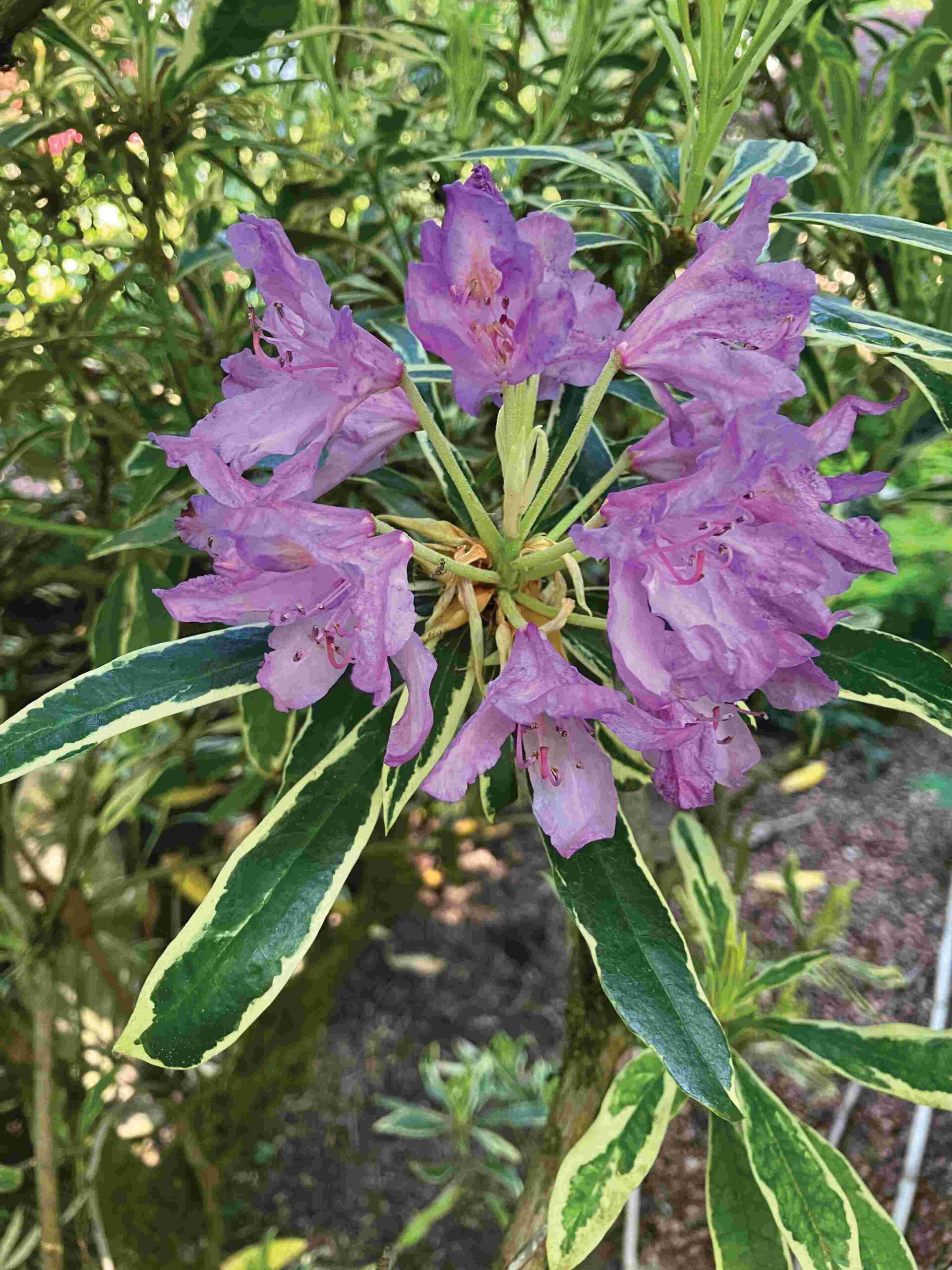
While rhododendrons are widely used in gardens throughout the Pacific Northwest, the diversity of the genus is amazing. One in particular that makes a colorful shrub all year with the variegation of the leaves is Rhododendron ponticum ‘Variegatum’. The leaves have a white variegation along the margins, and a further bonus is the purple flowers that appear in mid spring. It is not a tall grower, reaching maybe 6 feet in 10 years. Because of the colorful foliage, it can brighten up a dark corner and is ideal in a woodland garden setting.
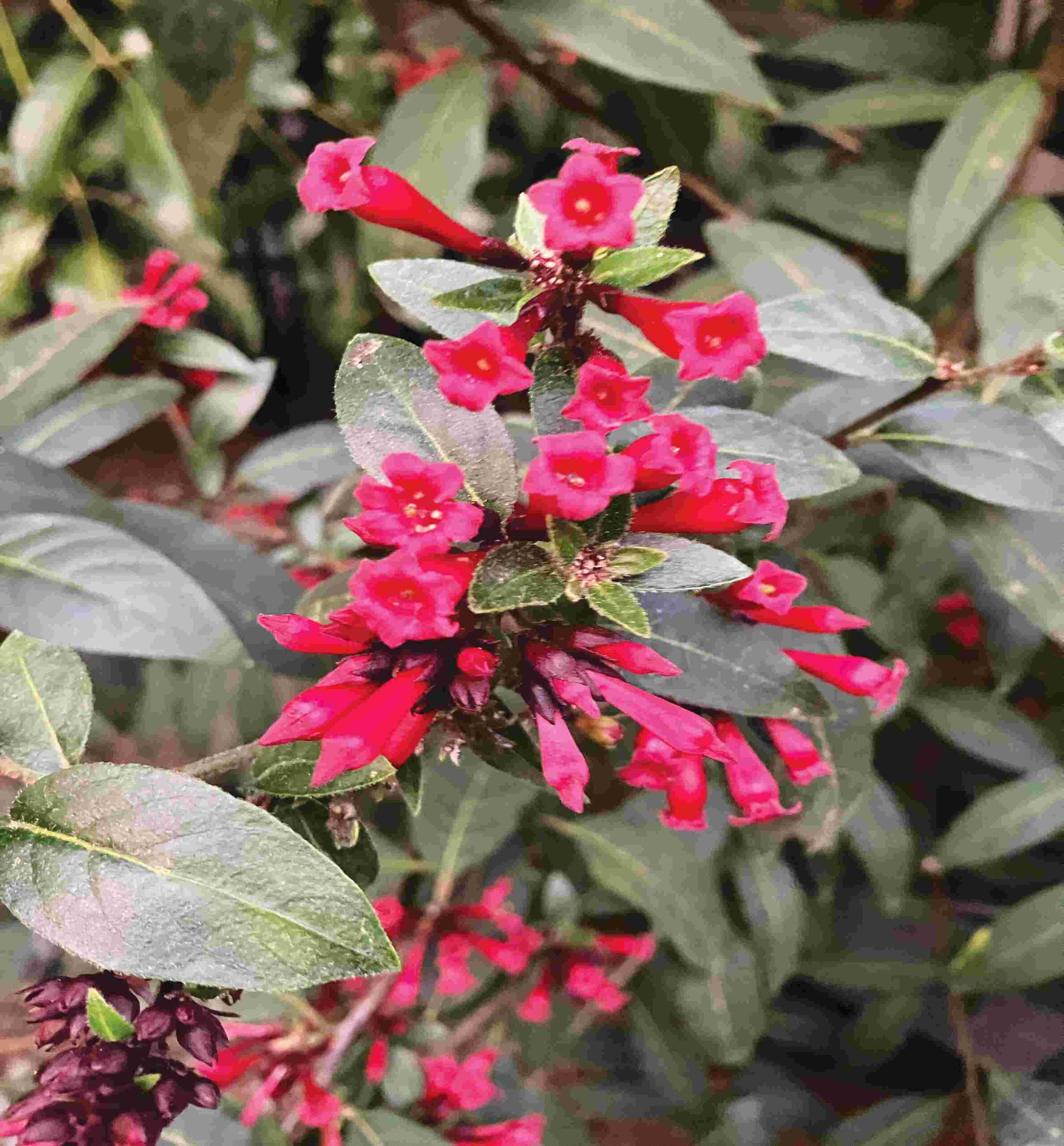
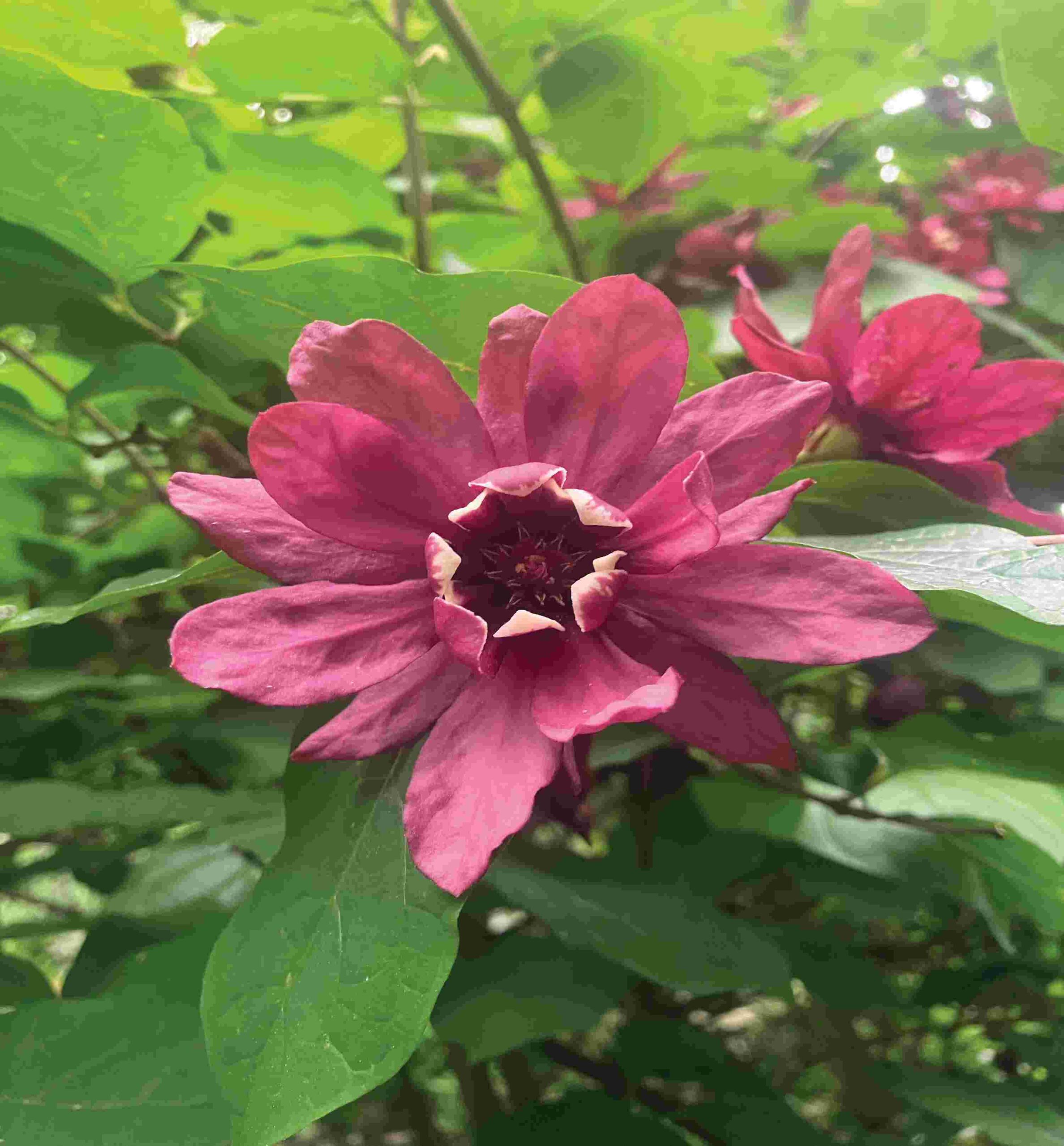
Calycanthus raulstonii ‘Hartlage Wine’ is a vigorous deciduous shrub that is a prolific spring bloomer. The flowers are a wine red, almost brown, which gives it a very distinctive color that is not often seen in flowers. It sometimes goes by the common name of spice bush, Carolina allspice, or sweet shrub — and with a name like that, one would assume that it is quite fragrant. However, I have never detected any fragrance.
The flowers are the main attraction of ‘Hartlage Wine’. When in bloom it is very much admired by visitors. I am often asked what the name is which indicates to me that it is not widely grown, which is surprising. As mentioned earlier, it is a vigorous shrub with my plant being probably 12 feet in height and at least 8 feet in width. I do prune it. but evidently not enough! It likes a location with full sun, though I have seen plants growing in partial shade, but the flower production is not quite as profuse.
While not reliably winter hardy in the Portland area, Cestrum elegans is worthwhile growing because of the long flowering period in the summer. It has masses of purple-red flowers that are followed by clusters of red berries which are very showy. I have two plants in my garden, one in the ground and one in a pot. Last winter was mild, so both plants survived and have been blooming most of April and there is no sign of them stopping. The red berries that appear after flowering are almost as attractive as the flowers. It thrives in full sun, and the plants have reached about 6 feet in height.
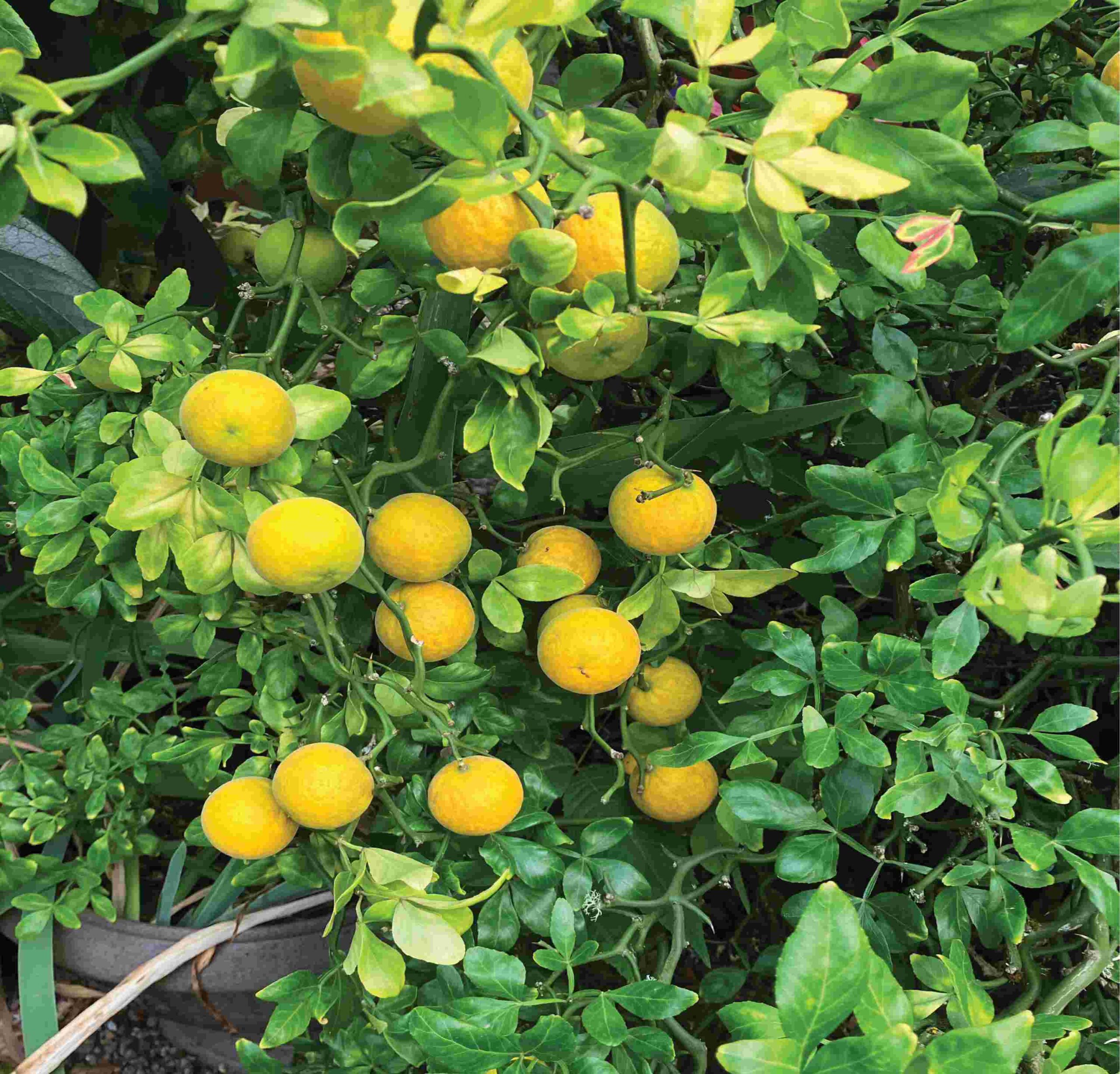
No need to worry about Citrus trifoliata ‘Flying Dragon’ being damaged by a cold winter. Often called hardy citrus or hardy orange, it is probably more of a curiosity plant but can be very attractive when covered with small oranges. While referred to as hardy orange, it is not an orange that is edible. The plant itself has contorted, twisty branches and downward facing thorns. These thorns are not tiny and can be 2–3 inches long. This is not a plant to have in a location where people will brush against it! ‘Flying Dragon’ makes a nice container plant and in the spring has white citrus-like fragrant flowers. It is deciduous and often the orange fruit will still be on the tree with bare branches.
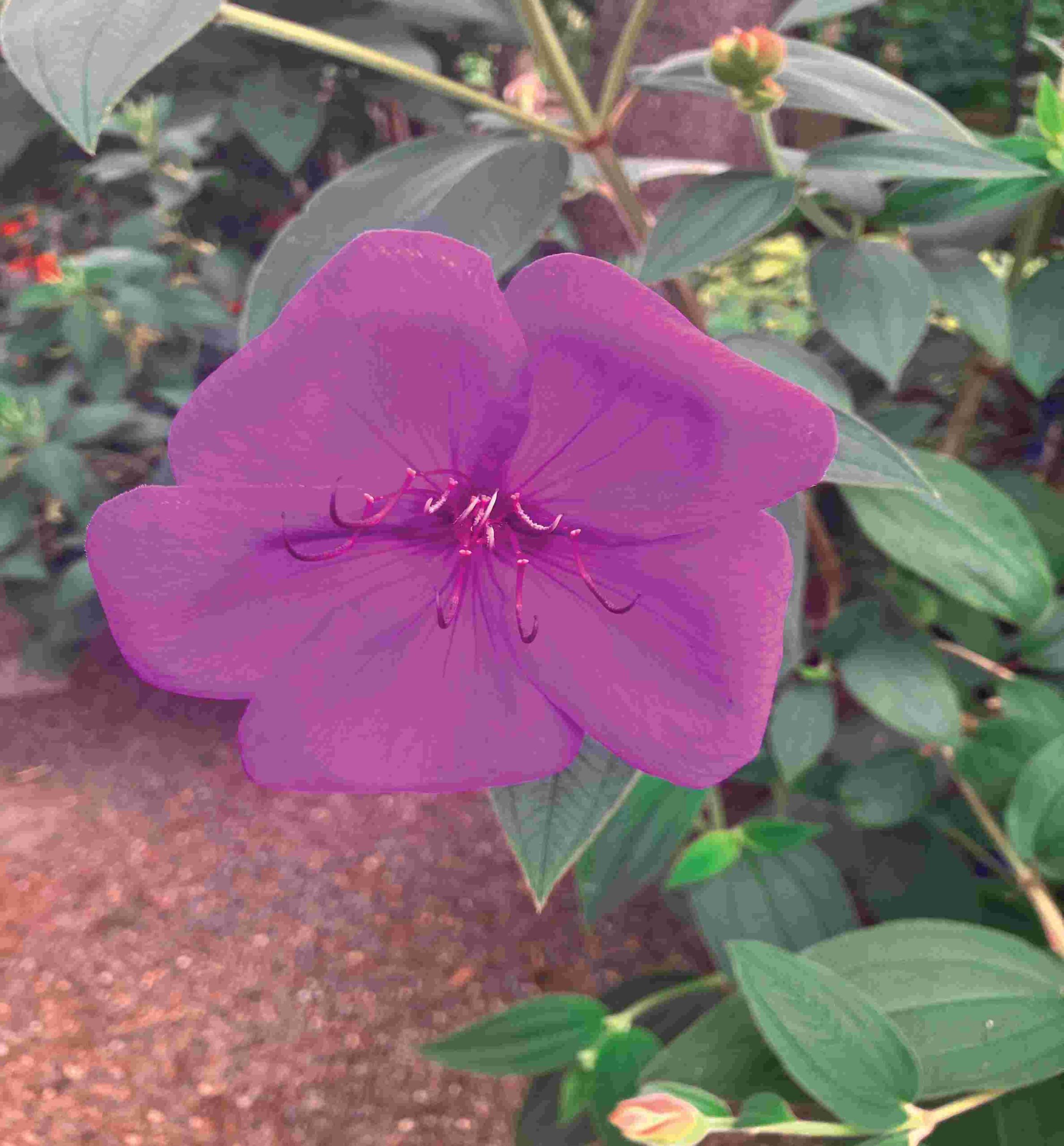
Never a plant that I thought that I would be mentioning as a shrub for Pacific Northwest Gardens, but the Brazilian native Tibouchina (princess flower), has survived for two years in my garden. It is in a large pot and has no protection. Last winter it had intermittent flowers and no die-back. The previous winter I did throw a blanket over it on freezing nights, and it did die back to the main trunk, but new growth soon appeared. It is blooming now and has been continuously in flower. The royal purple flowers are outstanding!
We never know what new plant we might find when visiting another garden or garden center. Even familiar plants can sometimes look different in another setting. I am constantly adding and removing plants.
Part of the fun of gardening is trying something new. Be bold — try a new plant. There are many orphan shrubs out there looking for a new garden to shine in.