
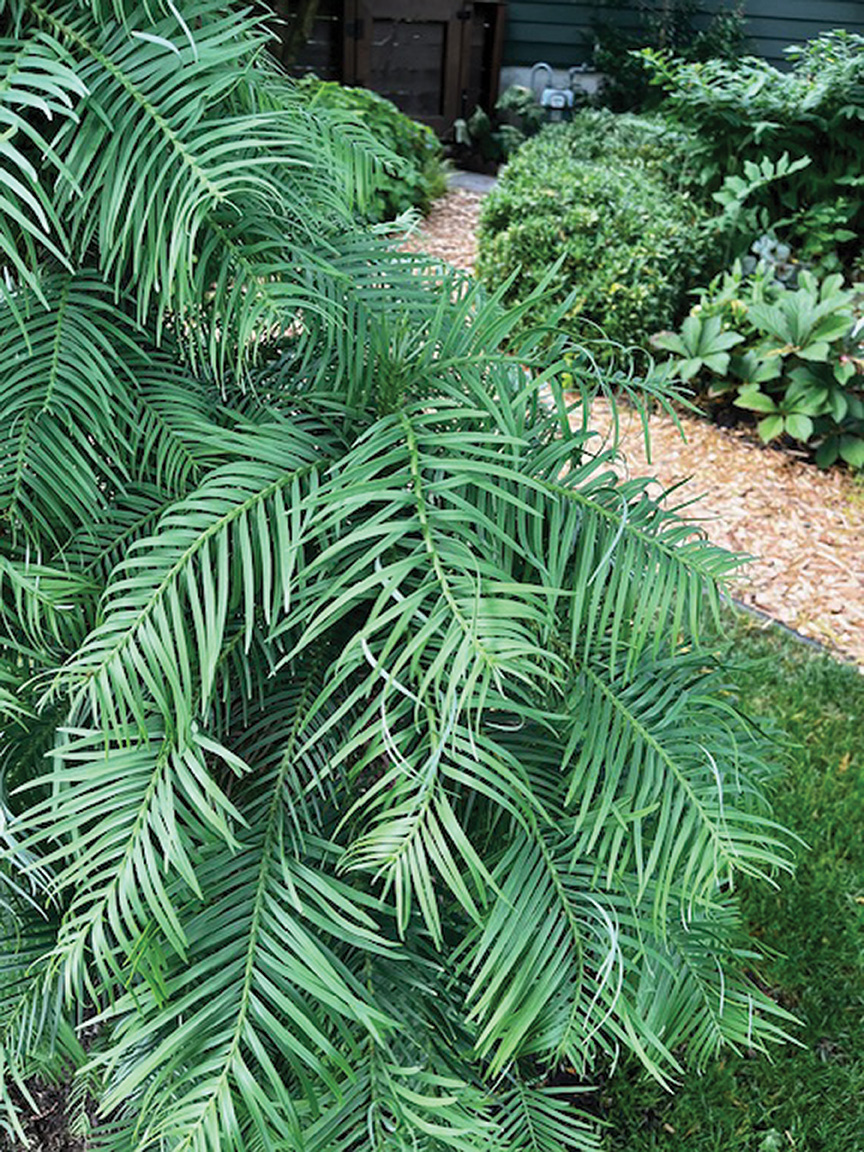
Wollemi pines are a prehistoric tree that’s hard to find in nature — let alone stores.
Gardeners are always seeking out the next new plant. These new introductions are often in high demand for their first few years on the market.
However, imagine for a moment an old plant — in fact a very old plant — that is in such high demand that it is almost impossible to find one to purchase.
That’s the Wollemi pine.
This unique plant dates back to about 90 million years ago. Actually, it is not even a true pine, although it is both evergreen and a conifer.
Wollemi pines (Wollemia nobilis) were discovered in Australia in 1994. New South Wales Services Officer David Noble came across them by chance in a deep rainforest gorge. He was unfamiliar with this tree, so he collected a fallen branch and took it to the Royal Botanic Garden in Sydney.
The sample intrigued scientists Wyn Jones and Jan Allan. The trio returned to the gorge. Once there, they were astounded by what they saw.
The plant was given the genus name Wollemia, for the Wollemi National Park, where it was first discovered. The species was named nobilis to honor Noble, who discovered it. Today there are approximately 100 mature trees remaining in the gorge, and they are classified as critically endangered. To protect the remaining trees, the exact location is not publicized.
During a Hardy Plant Society of Oregon Open Garden event, I noticed this plant in the Portland garden of Peter Eastman and Dayrol Griffin. It had a prominent spot in their garden where it was very visible.
After learning about the history of its discovery, I realized it was strategically placed and deservedly so.
It was no surprise to see such a tree in this garden because Peter is an avid gardener and well connected in our local horticulture scene. As the tree and shrub buyer for Al’s Garden & Home, he has his finger on the pulse of retail.
Caring for the Wollemi pine
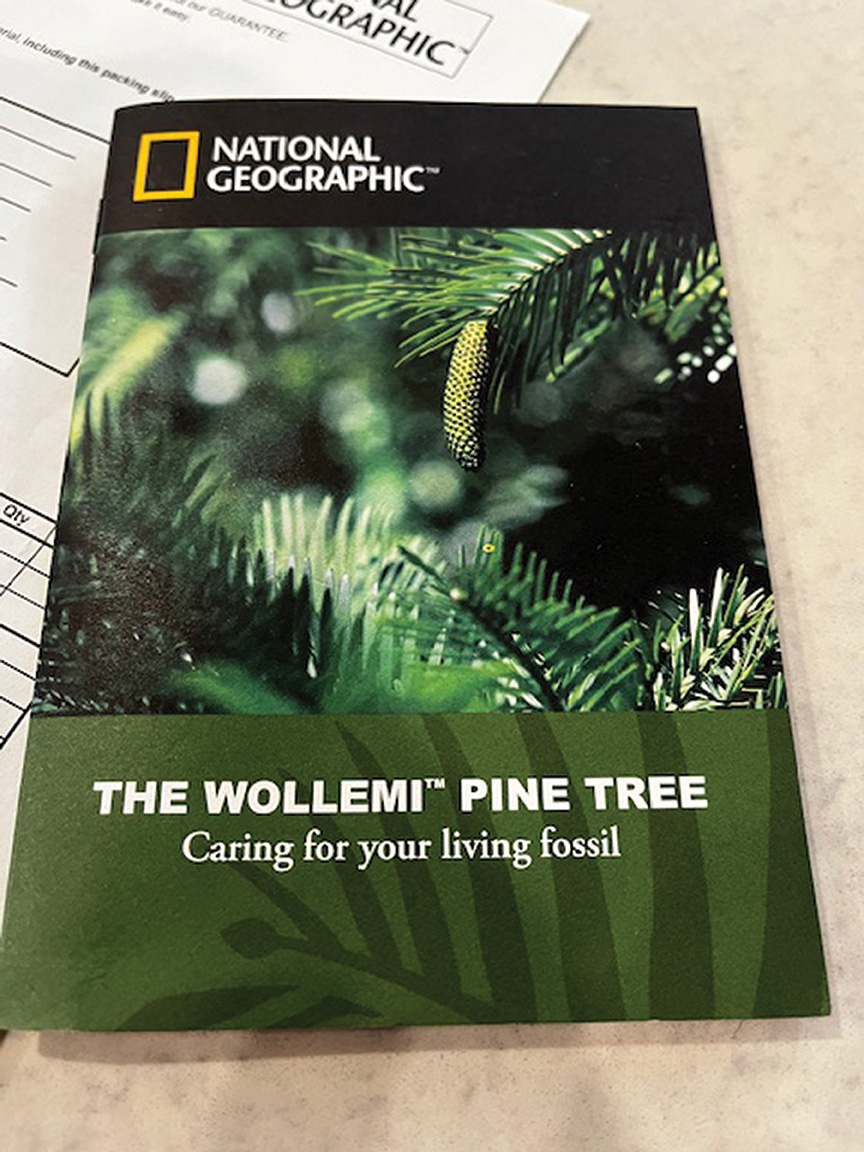
In 2006, the National Geographic Society was offering small Wollemi pine plants for sale by mail order. At that time, this was the only way to get a plant outside of Australia. Peter ordered one. It arrived in August of that year.
Peter knew little about the Wollemi pine. He wasn’t sure it would survive in our Pacific Northwest climate, so he kept it in a greenhouse for the first few years. In the summer he took it outside and placed it in the shade of other conifers.
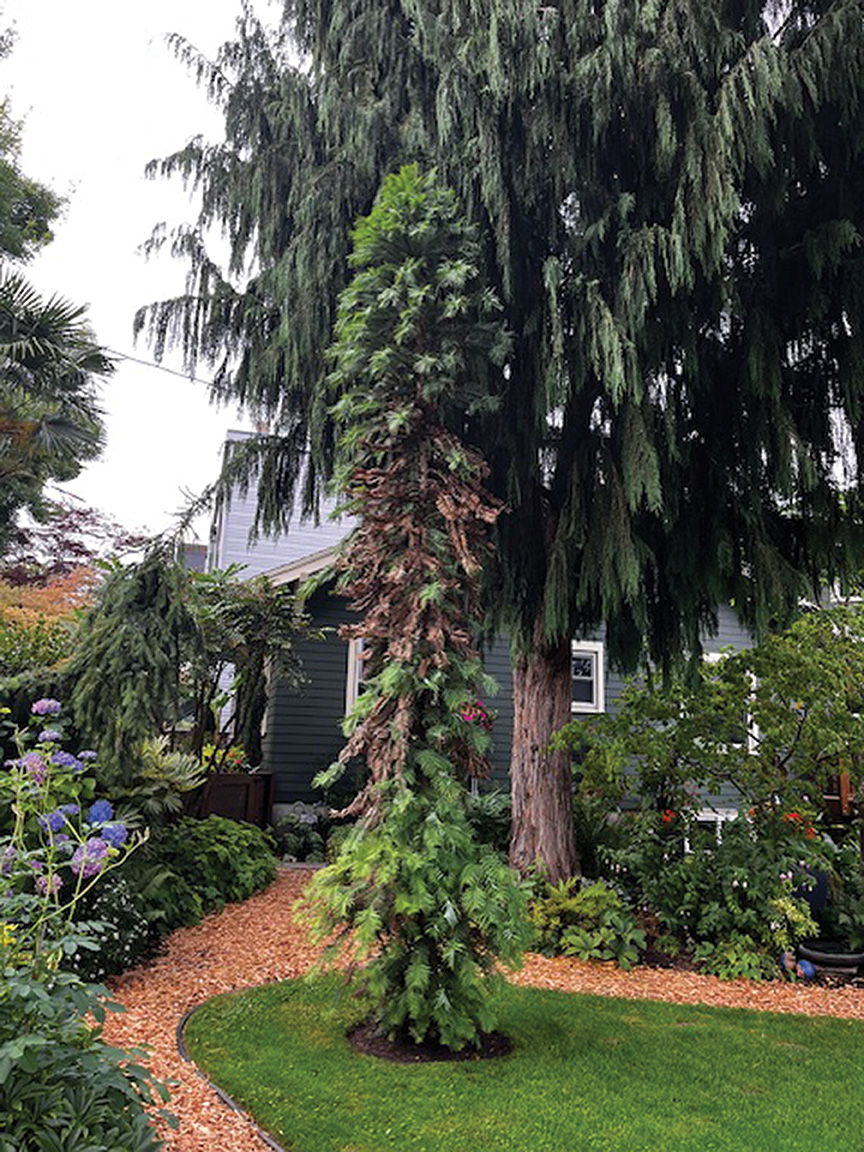
When the tree eventually reached 15 feet tall, it needed a permanent home outside in the ground. It was planted in a shady area in the lee of a sheltering cedar. Peter said that it does set male and female cones, but no seedlings have ever appeared.
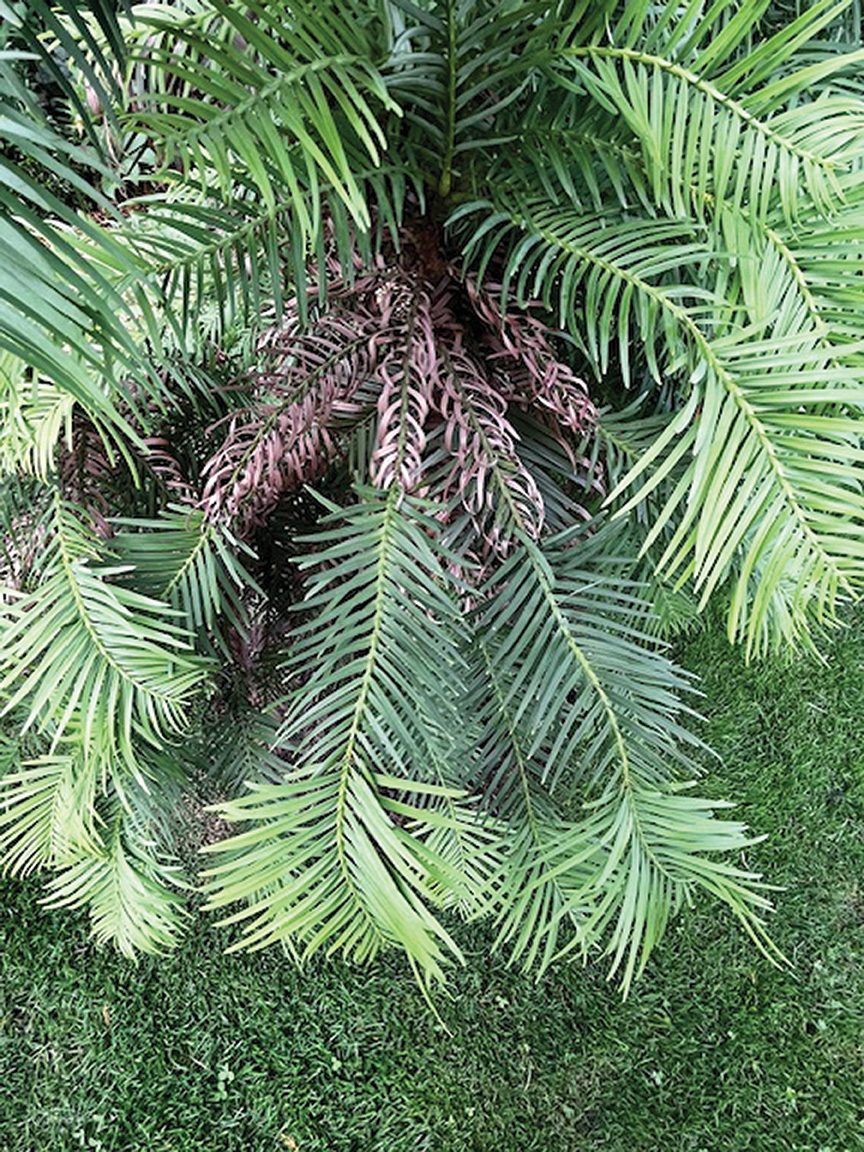
Looking at the tree today, there is an area in the middle of the tree that looks brown and burnt. This was the result of a winter storm. January 13 and 14, 2024, were the coldest days that year, with highs of 21 and 23 F, according to the National Weather Service in Oregon.
The Wollemi pine didn’t sustain critical damage, but some branches certainly did experience some winter kill. Since that winter freeze, the tree has sent out lush new growth at the top and new trunks from the main trunk. Eventually, it should become a multi-trunk tree, which is common of this tree in the wild.
“What I love about this conifer and how you can tell it is so ancient, is it lacks the ability to send out side branches,” Peter said. “Each branch sends out one growth spurt from the terminal bud and that is it. You can literally count the number of years growth on each branch by counting the growth sections. This is what gives the Wollemi pine its distinctive skinny appearance.
“Most conifers evolved the ability to send out side branches, giving them wider branches which provided the foliage more light and thus, more photosynthesis. But that evolution came after this plant. In the closeup branch photo, you can easily count the three years of growth.”
This past autumn season, and as part of the HPSO ‘After Hours’ series, Al’s Garden & Home hosted an evening event with conifers as the theme. Peter was able to secure five Wollemi pines for the event from Iseli Nursery, (Boring, Oregon). These were available for $500 each and they were all sold before the event began!
One of the fortunate recipients was Portland gardener Gene Rozenboom, who is an avid conifer sollector. I recently visited his garden, and his Wollemi pine is in a very prominent place. At the recent American Conifer National Conference held in Portland, Iseli’s donation of a Wollemi Pine sold for $3,600!
Jurassic plant hunting
The Wollemi pine is certainly sufficiently old enough to be classified as a Jurassic plant. The term “Jurassic plants” is sometimes used as a reference to those plants that were in existence from an age when dinosaurs roamed the earth.
In addition to the Wollemi pine, there are many other Jurassic plants that are often used in the gardens of today. For a fun day, imagine you are a paleontologist and scour the local the garden centers and botanical gardens to see how any Jurassic plants you can find. There are various lists available online to serve as a reference.