
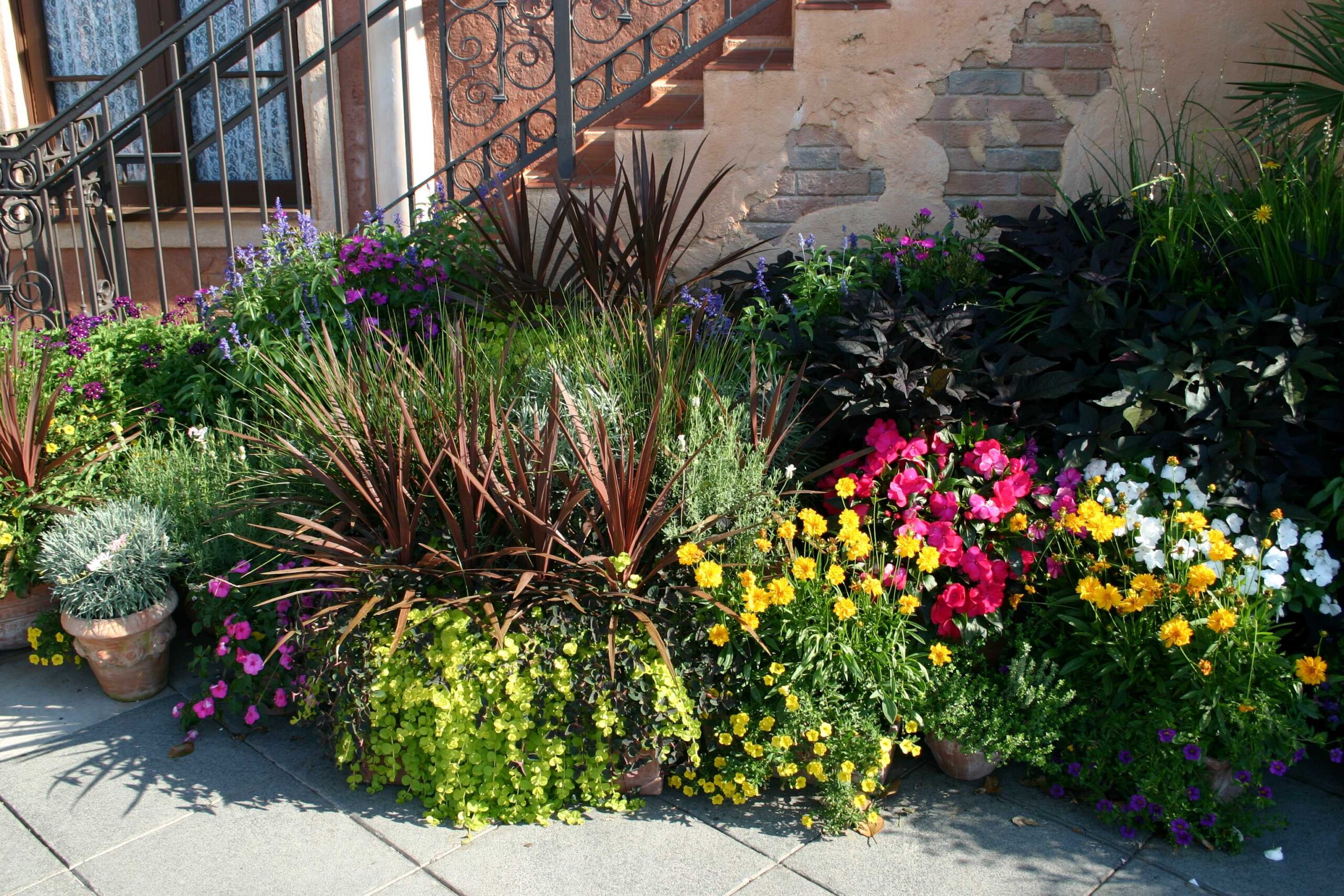
Pots, decorative planters, hanging baskets and more, containers offer a way to create a garden oasis in any sized space.
Containers work equally well for small backyards, apartment patios and townhouse balconies, said Judy Alleruzzo, tropical plant and perennial buyer at Al’s Garden & Home, with stores in Woodburn, Sherwood, Wilsonville and Gresham. She suggests mixing a group of containers together, while incorporating a small fountain or a large piece of art to add a height dimension.
“Put an obelisk in a container with a climbing plant like Clematis or black-eyed Susan vine (Thunbergia alata), or a tropical plant like a Mandevillea,” Alleruzzo said. “A small fountain is great to add because of the soft noise of the water, and you could use a statue or metal art as a nice complement to the containers.”
Amy Jo Detweiler, professor and horticulturist with Oregon State University Extension Service, also recommends putting multiple pots together. “From a design perspective clusters of pots have a greater impact visually than individual pots,” Detweiler said. “You can coordinate the color of the containers or use a mix of styles, colors and textures.”
Detweiler has taught several classes on container gardening over the years for the general public. She displays container gardens at the OSU Demonstration Garden each year.
Through Portland Nursery, which has two locations in the city, Terrie Jean Burdette managed a design service to help people design container gardens for a range of spaces, from large decks to postage stamp balconies.
“It allowed me experience in troubleshooting how to arrange pots in small spaces for a range of aesthetic preferences,” Burdette said.
Creating an oasis in a small space
Burdette said there are several practical questions to consider for people who live in a multi-unit building.
“Is watering going to drain on any patios below you? Is there a weight limit if you are using a balcony? Watch the sun — are there times that spots are completely blocked by sun or blasted by wind? Notice neighbors’ spaces: What types of plants are thriving?” Burdette said.
Even with strict homeowners association rules, there are solutions to work with. Burdette said there are many featherlight containers on the market now, as well as containers with a water basin to keep it off surfaces.
“If you are the first in your building to create a container garden — good for you! Gardening is contagious and I’ve seen many first-time gardening clients’ neighbors become inspired to start their own container garden,” Burdette said.
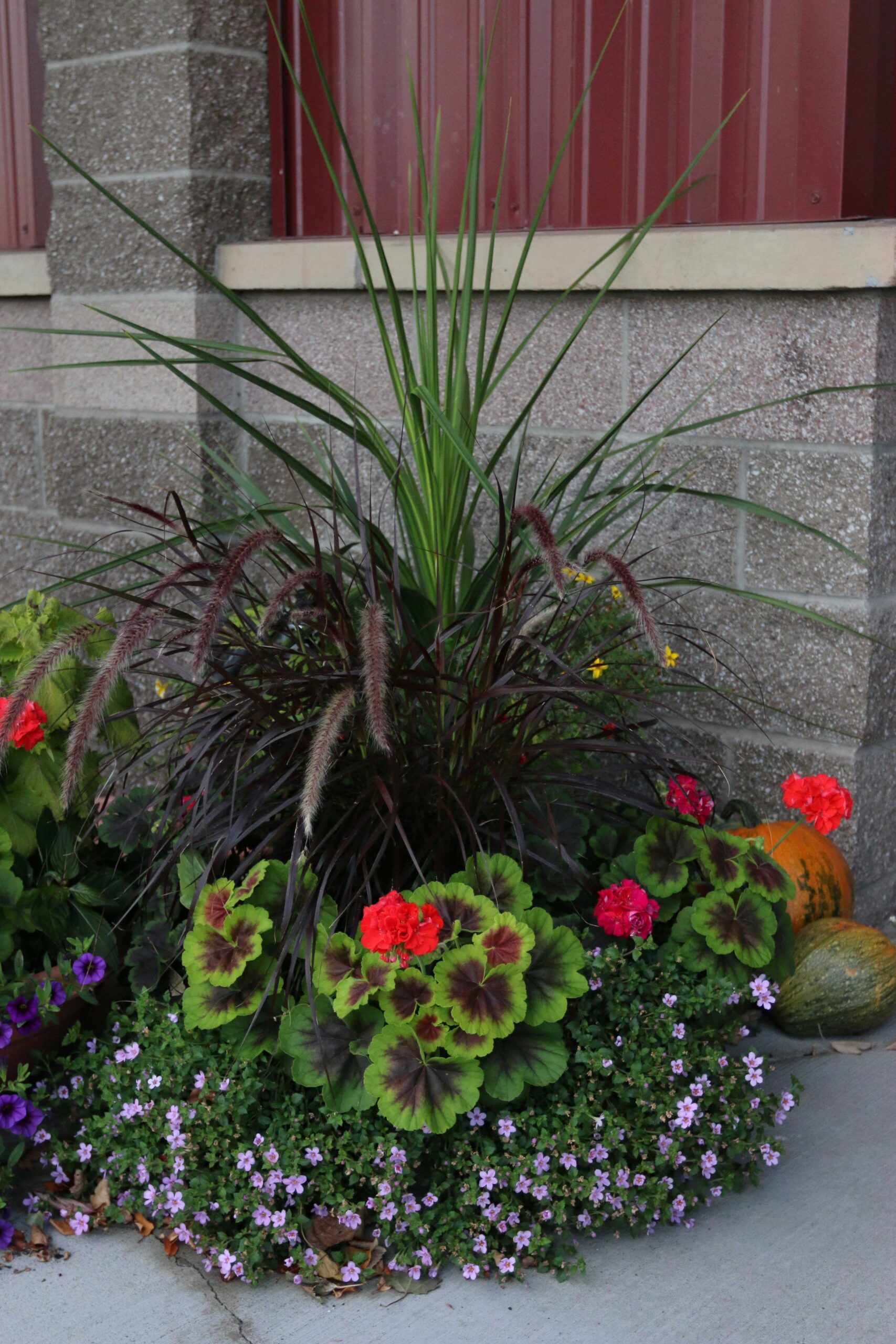
You can also change out containers seasonally to showcase different plants at different times of the year, Alleruzzo said. For example, a gardener could add in a fall interest plant along with pumpkins, gourds and cornstalks to create a vignette for the season.
“And if something is not growing successfully, you can just take a knife and take out that plant, add soil if you need to and put in a new plant for a new look,” Alleruzzo said.
Thriller, filler and spiller
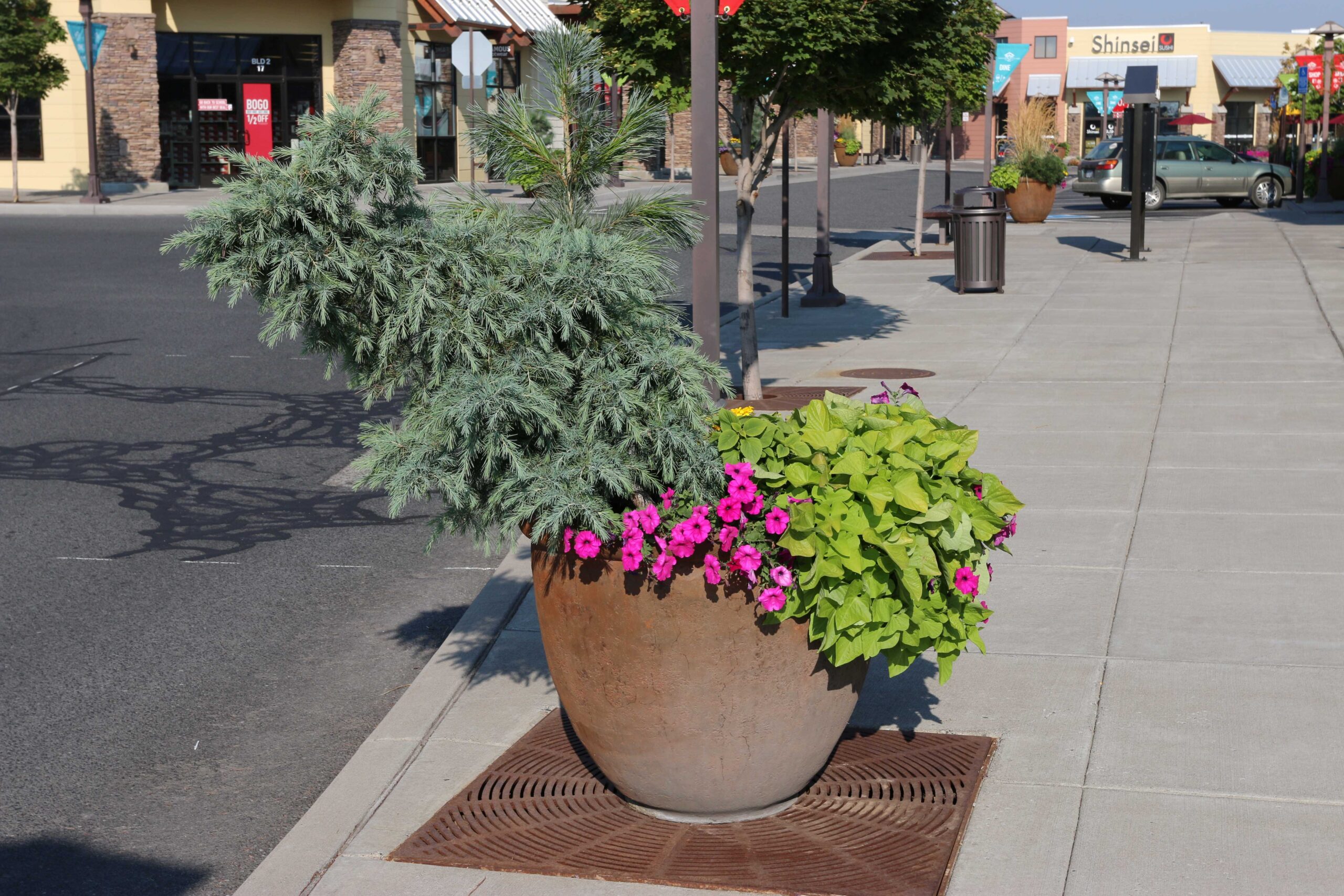
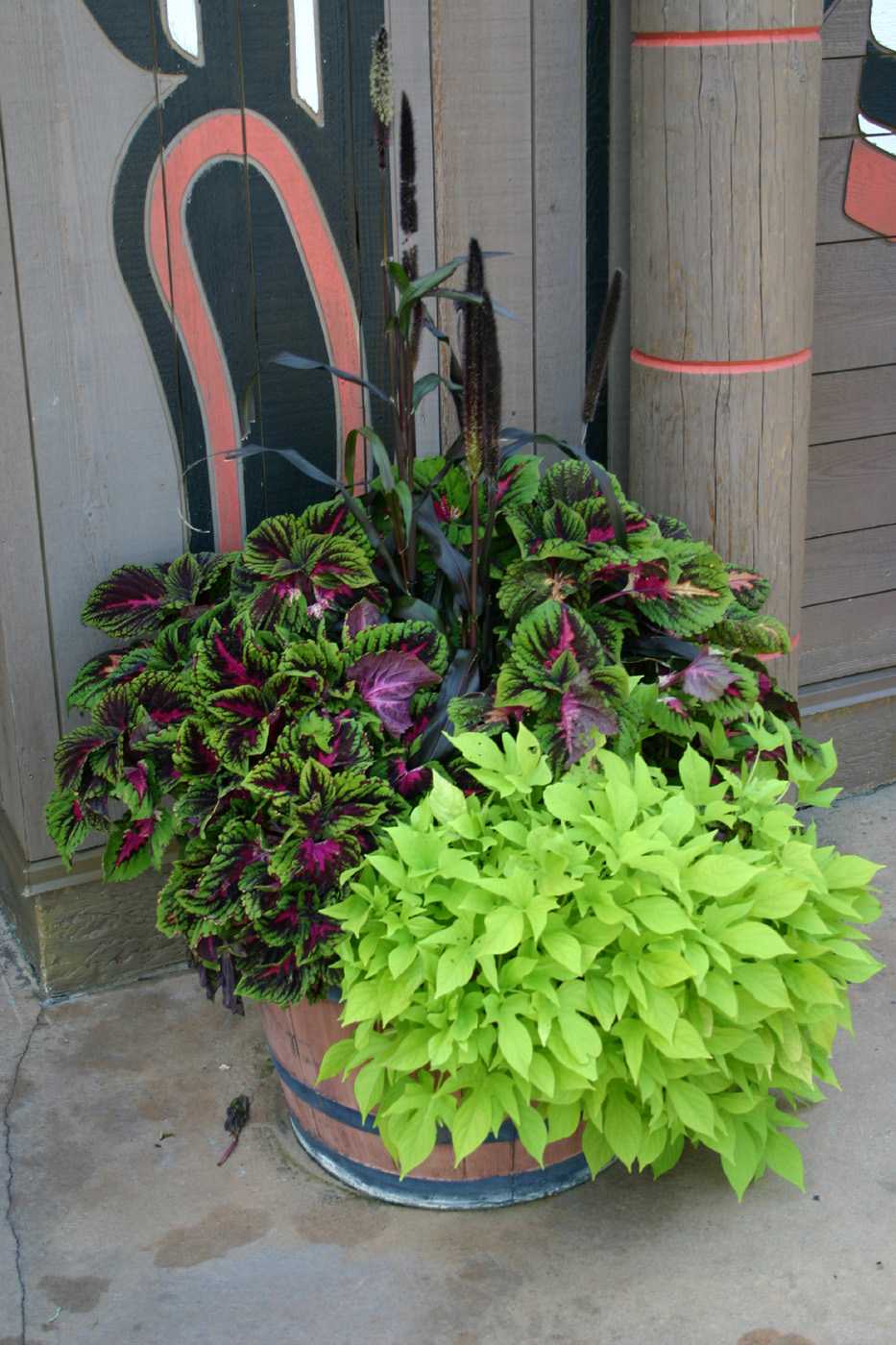
Alleruzzo said there are three easy words to keep in mind when creating an attractive container: thrillers, fillers and spillers.
The thriller is the center or center back focal point that adds some interest to the container, like a small blooming shrub, ornamental grass or Cordyline.
“The thriller is the main plant in there to draw the eye to something that’s blooming or architectural,” Alleruzzo said. “Grasses also give motion to a container arrangement.”
The filler refers to the middle height plants that fill in the space, such as snapdragons, Begonia, Coleus or Spanish lavender (Lavandula stoechas).
Then there’s the spiller plants.
“These are the plants that will cascade over the rim of the container, softening the edge like sweet potato vine (Ipomoea batatas), Bacopa, Vinca,” Alleruzzo said.
Detweiler said the thriller plants tend to be spiky, the fillers are mounding plants and the spillers are trailing plants.
“Generally, you will buy just one or two thriller type plants, fillers in groups of three and spillers buy one or more,” Detweiler said. “Use a variety of leaf colors and textures.”
Other advice
Detweiler said it’s important to use high-quality potting soil and a soilless planting media to ensure adequate drainage and space for the roots to grow freely. The soil can go up to within one inch of the lip of the container so there is room for a water reservoir when watering. She also said to avoid topsoil and native soil which can become compacted in a container environment.
If the gardener is using vegetables, Detweiler suggested selecting more compact ones. She said perennials can be used but may require extra care. She said gardeners should use a fertilizer high in phosphorous to encourage many annual blooms, such as one with 10% nitrogen, 60% phosphorus and 10% potassium.
Alleruzzo also recommends the “cram and jam” technique to completely fill a container without leaving any space.
“Use as many plants to make the container look finished as soon as it’s been planted,” Detweiler said.
Container gardeners should also group plants together with like sun or shade and water requirements.
Burdette said observing the light conditions is key. “Because patio spaces are often right against a building, you want to watch for those potential low light or strong sun spots to help decide which plants to use,” Burdette said. She added that gardeners need to work with the space they have. If they have a limited amount of patio space, they can hang wall-mounted pots or hanging baskets.
“Consider all the senses to heighten the garden experience: tabletop fountains for sound, solar lighting to enjoy the space in the evening, fragrant and soft-to-the-touch plants,” Burdette said.
“I am a fan of selecting a few backbone plants such as dwarf conifers, five-to-six-foot-range flowering shrubs, or a vine on an obelisk and then changing up the plants at their base either annually, or with perennials that I’ll change out every couple of years,” Burdette said.
Burdette has personally embraced keeping one single plant in a pot and arranging different vignettes around it over time.
“This allows the plant to fully root into its pot without competition and you can change up the combos if your pots are on casters or light enough to move easily,” Burdette said. “And it allows me to have a range of container sizes from little pots of violas up to twenty inch diameter pots for a Tetrapanex and a dwarf Heptacodium.”
Take the container color into consideration when choosing plants, Allerruzo said.
“Picking up the color of the foliage or flower or contrasting with it makes the whole container more creative and well thought out,” Alleruzzo said. She added that color themes work well too, with bold colors like oranges, yellows and burgundy or soft colors like pink, purple and silver.
Container types
Detweiler said she prefers ceramic or terra cotta pots as long as they allow for drainage. Gardeners can also drill holes into the bottom of a container that doesn’t already have them.
The look of terra cotta is appealing, but it’s important to keep in mind that it dries out quickly, Alleruzzo cautioned. She’s a fan of new lightweight containers from a company called Japi Pottery, which offers interesting shapes and sizes in neutral colors.
For heavy planters, Alleruzzo suggested getting a plant caddy with wheels to move them around. Burdette recommended the Down Under Plant Caddie to move heavy pots.
Soil maintenance
Gardeners should change out the soil in their containers every two years because otherwise it will stop draining as effectively, Alleruzzo said. For containers with shrubs, the soil can be replaced every two to three years and check the roots to see if they need pruning.
When Burdette was in her 20s and 30s, she rented places in Portland and moved her garden with her with many plants in hefty frost-safe containers.
“From those moves, I developed a habit of keeping the decorative containers empty of soil so I could place plants in black nursery pots into them,” Burdette said. “This makes it much easier to move, and to size up plants from their nursery pots when they need it.”
Opportunities
Gardening in containers is an opportunity to experiment, not a constraint.
“You can have a blueberry that prefers acidic soil right next to a lavender that likes alkaline soil. You can’t do that in the garden easily,” Burdette said. “If you do have an established garden, adding containers is a nice way to get away with plants you can’t put in the ground, like tender Cuphea you can winter over in a garage, or a dwarf peach that despises our soggy winter soil.”
It takes practice to create a lovely container garden. Alleruzzo recommended walking around a garden center and adding and subtracting plants in and out of a cart to choose the selections. And the staff members at garden centers are always ready to help a gardener come up with their container garden oasis.
Emily Hoard is an Oregon-based freelance journalist covering business, environmental and agricultural news. She has a background in community reporting and a master’s degree in multimedia journalism. You can reach her at Hoarde123@Gmail.com